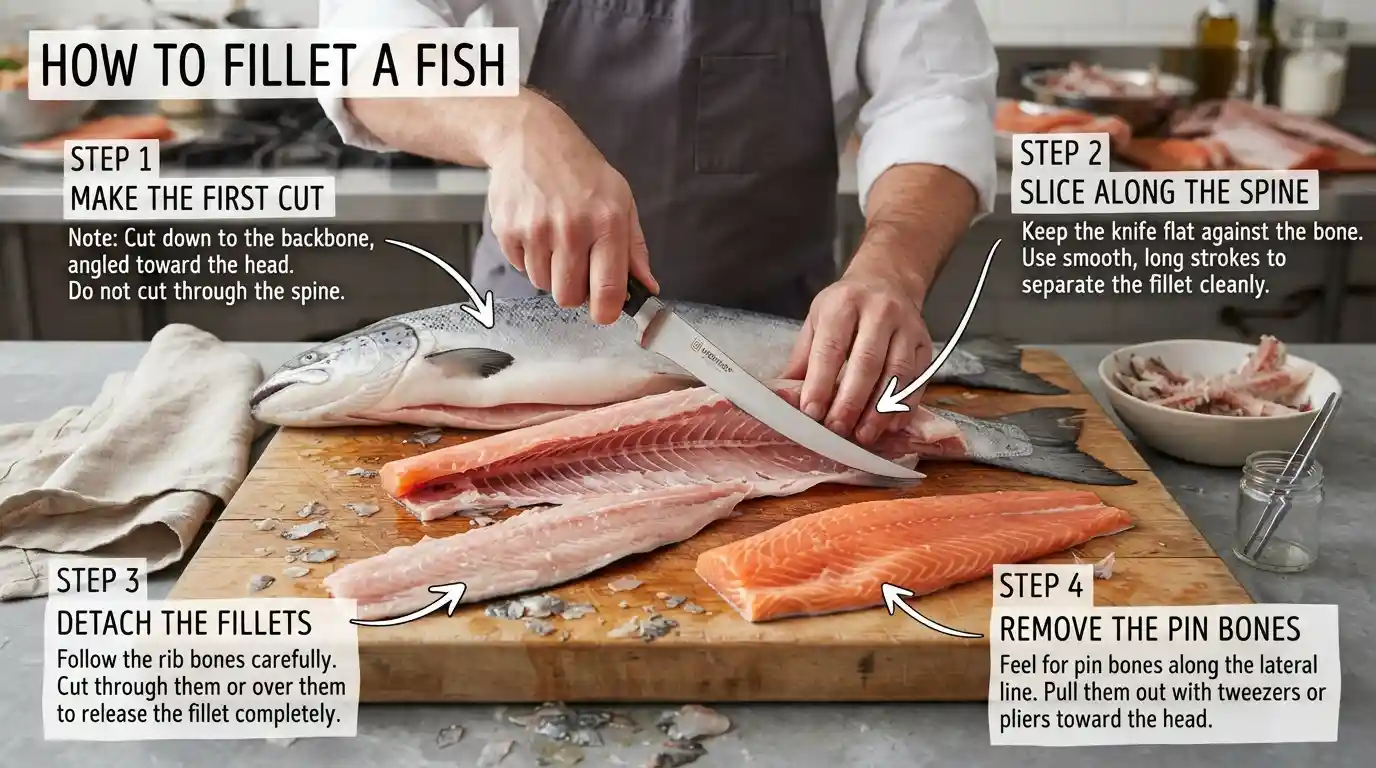
How To fillet a fish? place it on a stable cutting board and make a cut behind the gills until you reach the backbone. Turn the knife toward the tail and slide it along the backbone to separate the meat. Remove the fillet, repeat on the other side, then remove pin bones and skin if desired.
Key Takeaways
- Use a sharp, flexible fillet knife and a stable cutting surface.
- Make the first cut just behind the gills and pectoral fin.
- Let the backbone and ribs guide your knife toward the tail.
- Remove remaining pin bones with fish tweezers or clean pliers.
- Keep raw fish cold and refrigerate it at 40°F or below.
What You Need to Fillet a Fish
Learning how to fillet a fish becomes much easier when your tools are ready first. You do not need a large collection of equipment.
You will need:
- A sharp fillet knife
- A sturdy cutting board
- Paper towels or a clean kitchen towel
- Fish tweezers or clean needle-nose pliers
- A clean plate or container for the finished fillets
A long, thin, flexible fillet knife gives you better control around the bones. Most importantly, the blade should be sharp. A dull knife can require more pressure and make precise cuts harder.
Best Knife for Filleting
A flexible fillet knife works well because it can follow the natural shape of the fish. Choose a blade size that matches the fish you are preparing. A smaller knife is easier to control on small panfish, while a longer blade can be useful for larger fish.
Keep your fingers away from the cutting path. A wet or slimy fish can also slide, so dry the outside of the fish and keep your work surface stable.
Prepare a Safe Work Area
Before cutting, clean your cutting board and tools. Keep the fish cold until you are ready to work with it.
When handling raw seafood, wash your hands and clean surfaces after preparation to reduce cross-contamination. The FDA recommends keeping seafood refrigerated at 40°F or below.
How to Fillet a Fish Step by Step
The basic technique below works for many common round fish, although the exact cuts can vary by species and size.
1. Position the Fish
Lay the fish flat on the cutting board with its side facing you. Keep the head toward your non-knife hand so you can hold the fish securely while cutting.
If the fish is slippery, pat it dry with a clean towel. A firm grip helps you make smoother cuts.
You do not necessarily need to remove the head before filleting. Many basic filleting methods begin with the head still attached.
2. Make the First Cut Behind the Gills
Pull the pectoral fin slightly away from the body. Place your knife just behind the gill plate and make a diagonal cut toward the backbone.
Cut until you feel the blade reach the backbone. For a basic filleting method, you do not need to force the knife through the backbone.
This first cut creates an opening that lets you guide the knife along the fish’s bones.
Take your time here. A clean first cut makes the rest of the process much easier.
3. Cut Along the Backbone
Turn the blade so it points toward the tail. Keep the knife relatively flat and slide it along the backbone.
Use smooth strokes instead of forcing the knife. The bones should help guide the blade.
As you move toward the tail, gently lift the loose fillet with your other hand. This gives you a better view and helps keep the knife close to the bones.
Staying close to the skeleton is important because it helps you recover more edible meat. Guides from Take Me Fishing and other culinary sources use the backbone and ribs as the natural guide for this cut.
4. Remove the First Fillet
Continue cutting toward the tail until the fillet separates from the fish.
As you reach the rib cage, angle the knife slightly so you can follow the curve of the ribs. Avoid cutting deeply into the belly cavity.
Once the meat is free, place the fillet skin-side down on a clean plate or board.
Do not worry if your first fillet is not perfect. Beginners often leave a little meat on the frame. With practice, you will learn to keep the blade closer to the bones without cutting through them.
5. Repeat on the Other Side
Turn the fish over and repeat the same process.
Make the first cut behind the gills. Then turn the knife toward the tail and follow the backbone. Work carefully around the ribs until the second fillet comes free.
You should now have two fillets and the remaining fish frame.
The exact technique can change depending on the species. Flat fish, for example, require a different approach from round fish such as trout, bass, salmon, or snapper.
6. Remove Pin Bones
Even after the fillets are separated, small bones may remain.
Run clean fingers gently over the surface of the fillet to find any pin bones. You can remove them with fish tweezers or clean pliers.
Pull each bone in the same general direction it is pointing rather than tearing aggressively through the meat.
This small step makes the finished fillet easier and more pleasant to eat.
7. Remove the Skin
Removing the skin is optional. Some fish taste excellent when cooked with the skin left on, while other recipes call for skinless pieces.
To skin a fillet, place it skin-side down. Start near the tail and make a small cut between the meat and skin.
Hold the skin firmly and keep the knife nearly flat. Move the blade forward with a gentle sawing motion while pulling the skin in the opposite direction.
Try to keep the blade close to the skin so you do not remove too much meat.
How to Fillet a Fish Without Wasting Meat
The main trick is to let the bones guide your knife.
Do not press the blade deeply into the fish. Instead, use controlled strokes and stay close to the backbone and ribs.
If you feel the knife hit a bone, stop and adjust the angle rather than pushing harder. A sharp blade should do most of the work.
Another useful habit is to lift the fillet slightly as you cut. This exposes the area underneath and lets you see where the blade is traveling.
Do not rush the first few fish you fillet. Speed usually comes naturally after you learn where the bones are.
The remaining frame does not have to be thrown away. Depending on the species and local rules, it can be useful for making fish stock.
Common Fish-Filleting Mistakes
Using a dull knife: A dull blade makes controlled cutting more difficult. Keep your fillet knife properly sharpened.
Cutting too deeply: Deep cuts can damage the belly cavity or leave unnecessary meat on the bones. Use shallow, controlled strokes.
Forcing the blade: When the knife catches on bone, change the angle instead of pushing harder.
Ignoring the ribs: The rib cage holds meat close to the bones. Carefully follow its shape to recover more of the fillet.
Forgetting pin bones: Always feel the finished fillet before cooking it.
Working with a slippery fish: Pat the fish dry and keep your hands and work surface secure.
Leaving fish warm for too long: Raw seafood is perishable. Keep it chilled during preparation.
How to Store Fresh Fish Fillets Safely
Once the fillets are ready, keep them cold.
The FDA recommends storing seafood in a refrigerator at 40°F or below when it will be used within two days. If you will not use it within that period, freezing is an option.
Fresh fish should not sit at room temperature for extended periods. USDA guidance identifies 40°F to 140°F as the temperature range where bacteria can grow rapidly and advises against leaving perishable food unrefrigerated for more than two hours.
For food safety, keep raw fish separate from ready-to-eat foods. Wash your hands, cutting board, knife, and other surfaces after handling raw seafood.
When you cook the fish, the FDA lists 145°F as the safe minimum internal temperature for fin fish, or until the flesh is opaque and separates easily with a fork.
Frequently Asked Questions
Do you need to scale a fish before filleting?
Not always. Scaling is not required for the basic filleting method because the fillet can be separated from the fish and the skin can be removed afterward. If you plan to cook the fillet with the skin, scaling may be useful depending on the species.
What is the best knife for filleting fish?
A sharp, flexible fillet knife is a practical choice. The flexible blade helps you follow the backbone and ribs while separating the meat. The ideal blade length depends on the size of the fish.
How do you remove fish skin?
Place the fillet skin-side down and start a small cut between the skin and meat near the tail. Hold the skin firmly and slide the knife almost flat between the two layers while pulling the skin away.
How long can fresh fish stay in the refrigerator?
USDA guidance recommends keeping raw fish refrigerated at 40°F or below and cooking or freezing it within one to two days.
Conclusion
Learning how to fillet a fish is mostly about understanding the location of the backbone and ribs and keeping your knife under control. Start with a clean work surface, make a careful cut behind the gills, and let the bones guide the blade toward the tail. Repeat the process on the other side, then remove pin bones and skin if needed.
Your first fish may not produce perfect fillets, and that is normal. Focus on safe handling, smooth cuts, and staying close to the bones. With practice, you will become more comfortable and waste less meat. Keep the finished fillets properly chilled, and they will be ready for your favorite fish recipe.

Dan Brown is a passionate relationship writer and anniversary message expert at coupleanniversary. With a deep understanding of love, marriage, and meaningful celebrations, he specializes in creating heartfelt anniversary wishes, romantic messages, and thoughtful words that help couples express their emotions perfectly.