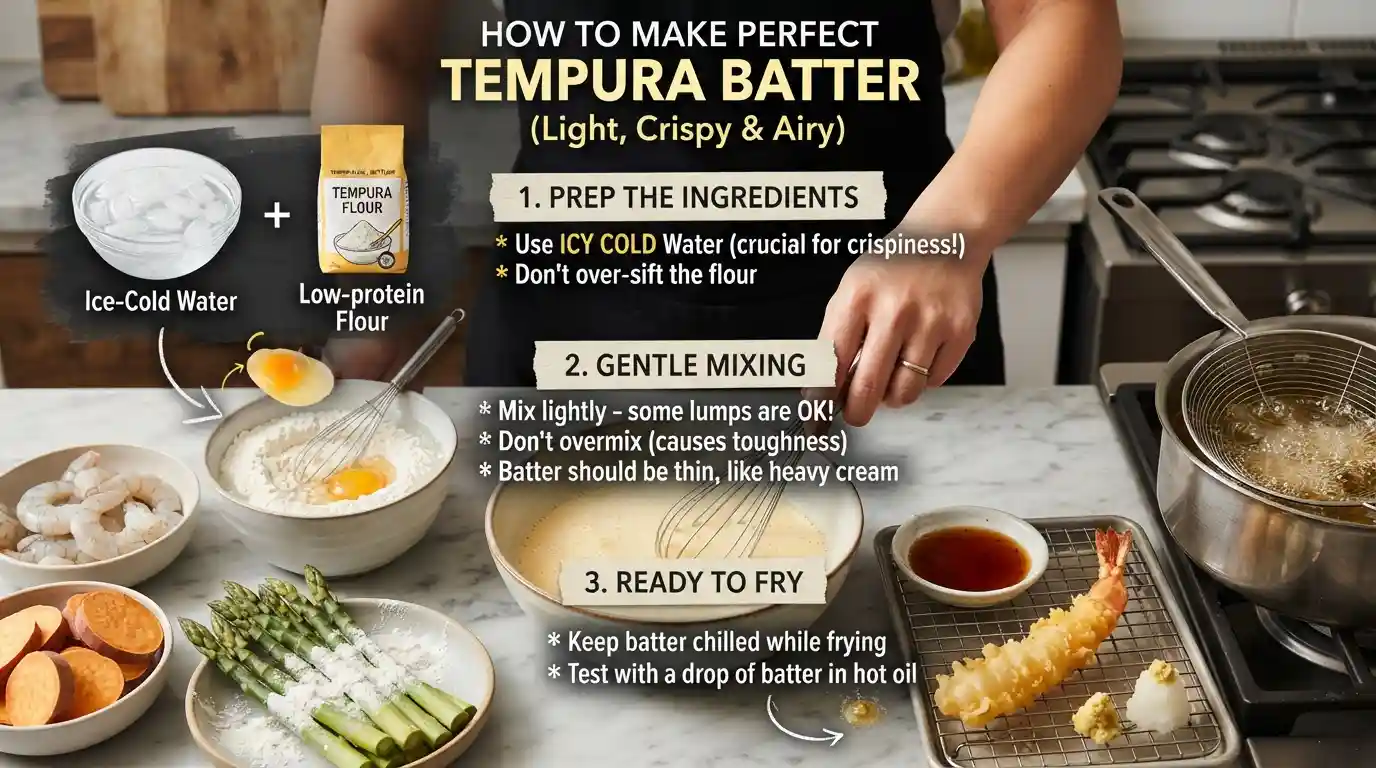
To make tempura batter, combine 1 cup all-purpose flour, 2 tablespoons cornstarch, 1 cold egg yolk, and about 1 cup ice-cold sparkling water. Stir gently until just combined, leaving a few lumps. Dip dry shrimp or vegetables into the batter and fry immediately in hot oil until crisp and pale golden.
Key Takeaways
- Keep your water and egg very cold for a lighter coating.
- Mix the batter only until the ingredients come together.
- A few lumps are normal and desirable.
- Pat shrimp and vegetables dry before dipping.
- Use the batter immediately instead of letting it sit.
- Fry in small batches so the oil stays hot.
What Is Tempura Batter?
Tempura batter is a thin mixture used to coat seafood and vegetables before deep-frying. Unlike a thick fish-and-chips batter, good tempura should feel light and delicate rather than heavy or doughy.
Traditional-style recipes commonly use flour, cold water, and egg, while other versions use cornstarch, cake flour, or sparkling water. The exact ingredients can vary, but the main goal stays the same: create a delicate coating with minimal gluten development.
For a simple home recipe, you do not need special Japanese ingredients. All-purpose flour, cornstarch, a cold egg yolk, and ice-cold sparkling water can give you a light, crisp coating.
Ingredients for Homemade Tempura Batter
Here is a practical recipe that works well for shrimp, vegetables, and other small pieces of food.
| Ingredient | Amount |
| All-purpose flour | 1 cup |
| Cornstarch | 2 tablespoons |
| Cold egg yolk | 1 large |
| Ice-cold sparkling water | About 1 cup |
| Salt | ¼ teaspoon |
Why use cornstarch? It replaces part of the wheat flour and helps create a lighter, crisp coating.
Why sparkling water? The carbonation can help produce an airy texture. However, sparkling water is not essential. Very cold still water can also work.
Why only an egg yolk? Egg yolk adds richness without making the batter as heavy as a batter containing a whole egg.
Different traditional and modern recipes use different proportions, including versions made with cake flour, egg yolk, and ice water or flour and cornstarch with sparkling water.
How to Make Tempura Batter Step by Step
1. Keep the Ingredients Cold
Start with very cold sparkling water and a cold egg. You can even chill your mixing bowl for a few minutes if your kitchen is warm.
Cold ingredients are important because you want to slow gluten development and keep the batter light. Prepare the ingredients you plan to fry before mixing the batter so you can move quickly once it is ready.
2. Mix the Wet Ingredients
Add the cold egg yolk to the sparkling water. Stir gently with a fork or chopsticks until the yolk is broken up.
Do not spend a long time whisking. You are not trying to make a perfectly smooth liquid.
3. Add the Flour
Place the flour, cornstarch, and salt in another bowl. Add the dry ingredients to the cold liquid.
For the lightest texture, avoid working the flour more than necessary.
4. Mix Briefly
This is one of the most important steps.
Use chopsticks, a fork, or a whisk and stir only a few times. Stop when the flour is mostly incorporated.
Do not try to make the batter completely smooth.
Small lumps are perfectly fine. In fact, many tempura recipes specifically recommend stopping while lumps remain because excessive mixing develops gluten and can make the finished coating heavier.
5. Use the Batter Right Away
Your batter is now ready.
Dip your dry shrimp or vegetables into it, allow excess batter to drip away, and transfer the food directly into hot oil.
Do not leave the batter sitting on the counter while you prepare other ingredients. For the best texture, mix it shortly before frying and use it promptly.
How Thick Should Tempura Batter Be?
Tempura batter should be thin enough to coat the food lightly but thick enough to cling to its surface.
Think of a light coating rather than pancake batter.
If the batter looks extremely thick, add a small splash of ice-cold water. If it barely sticks to the food, add a little more flour.
You do not need a perfectly measured consistency because flour, humidity, and the amount of liquid can vary. Look for a loose batter that lightly covers the ingredient.
How to Get Extra-Crispy Tempura
The batter itself is only part of the equation. Your technique matters just as much.
Keep everything cold. Cold liquid and minimal mixing help maintain a delicate batter.
Do not overmix. Smooth batter is not the goal. A few small lumps are fine.
Dry your food first. Excess moisture can make the batter slide off and can also cause hot oil to splatter.
Use hot oil. Many tempura recipes use an oil temperature around 340–360°F, with exact temperatures varying according to the ingredient and size.
Avoid overcrowding. Adding too much food at once can drop the oil temperature and produce greasy rather than crisp results.
Drain properly. Remove fried pieces with tongs or a slotted utensil and let excess oil drain. A wire rack works especially well because air can circulate around the food.
Serve quickly. Tempura has its best texture shortly after frying. Even excellent tempura can soften as it sits.
How to Use Tempura Batter for Shrimp and Vegetables
Before battering shrimp, remove excess moisture with paper towels. If the shrimp are large, make a few shallow cuts along the underside so they stay straighter during frying.
For vegetables, good choices include:
- Sweet potato
- Bell pepper
- Eggplant
- Green beans
- Asparagus
- Mushrooms
- Onion
- Carrot
- Broccoli
- Shishito peppers
Cut vegetables into pieces that can cook quickly. Dense vegetables such as sweet potato or carrot may need thinner slices so the inside cooks before the batter becomes too dark.
Lightly dusting an ingredient with flour before dipping can also help the batter adhere, a technique recommended by several tempura guides.
Fry only a few pieces at a time. Once they become crisp and pale golden, remove them and drain immediately.
Common Tempura Batter Mistakes
Overmixing the batter
This is one of the easiest mistakes to make. You may think a smooth batter is better, but excessive mixing encourages gluten development.
Fix: Stir briefly and stop while small lumps remain.
Using warm water
Warm water can make it harder to maintain the light texture you want.
Fix: Use ice-cold water or chilled sparkling water.
Frying wet ingredients
Water on shrimp or vegetables can prevent the batter from sticking properly and can cause oil to splatter.
Fix: Pat everything dry before dipping.
Letting the batter sit too long
As the batter sits, its texture can change and the flour continues to hydrate.
Fix: Prepare your ingredients first, then mix the batter immediately before frying.
Overcrowding the pan
Too much food can lower the oil temperature.
Fix: Fry in small batches and allow the oil to return to temperature between batches.
Making the coating too thick
A thick layer can turn tempura into a heavy, doughy coating.
Fix: Use a loose batter and let excess batter drip away before frying.
Easy Egg-Free Tempura Batter
You can make tempura without eggs.
For a simple egg-free version, combine:
- 1 cup all-purpose flour
- 2 tablespoons cornstarch
- 1 cup ice-cold sparkling water
- ¼ teaspoon salt
Stir the ingredients gently until just combined. Leave some small lumps, then use the batter immediately.
Egg-free tempura is especially useful for vegetable tempura and vegan meals. Japanese cuisine also includes plant-based tempura preparations, so an egg-free batter is not simply a modern substitute.
The texture may differ slightly from an egg-yolk version, but careful temperature control and minimal mixing can still produce a crisp coating.
Frequently Asked Questions
What is tempura batter made of?
Basic tempura batter is usually made from flour and cold liquid, with many recipes also using egg. Some versions include cornstarch, cake flour, or sparkling water. The ingredients vary, but the batter should remain light and should not be heavily mixed.
Can I use all-purpose flour for tempura?
Yes. All-purpose flour is an easy option for home cooks and appears in many tempura recipes. Cake flour can produce a more delicate texture because it is lower in protein, but you do not need specialty flour to make good homemade tempura.
Why should tempura batter be cold?
Cold ingredients help slow gluten development and maintain a lighter batter. Keeping the batter cold also creates a strong contrast with the hot frying oil. For best results, use cold liquid and mix the batter shortly before frying.
Should tempura batter be smooth?
No. Tempura batter does not need to be smooth. Small lumps are normal. Overmixing can develop gluten and make the coating heavier, so stir only until the ingredients are loosely combined.
Can I use sparkling water for tempura batter?
Yes. Cold sparkling water is a popular option because carbonation can help create a lighter, airier coating. However, sparkling water is not required. Ice-cold still water can also produce good tempura when you mix gently and fry correctly.
Why is my tempura not crispy?
Common causes include warm batter, overmixing, wet ingredients, low oil temperature, and overcrowding the pan. Keep the batter cold, stir it minimally, dry the food thoroughly, and fry in small batches.
Can I make tempura batter ahead of time?
For the best texture, make tempura batter immediately before frying. You can prepare your shrimp, vegetables, and dry ingredients in advance, but mix the wet and dry ingredients close to cooking time.
Conclusion
Learning how to make tempura batter is easier than it may seem. You only need a few basic ingredients, but technique makes a major difference.
Use cold liquid, keep your ingredients dry, and resist the temptation to whisk the batter until perfectly smooth. Small lumps are fine. Once the batter is mixed, use it right away and fry your food in small batches.
For an easy starting point, combine all-purpose flour, cornstarch, egg yolk, and ice-cold sparkling water. With a little practice, you can use the same basic batter for shrimp, sweet potatoes, mushrooms, peppers, green beans, and many other vegetables.
The secret is simple: keep it cold, mix it lightly, and fry it promptly.

Margaret Mitchell is the expert behind coupleanniversary. Transforming ordinary anniversaries into unforgettable memories. With unmatched insight in love, relationships, and celebration ideas, she guides couples to make every milestone special.