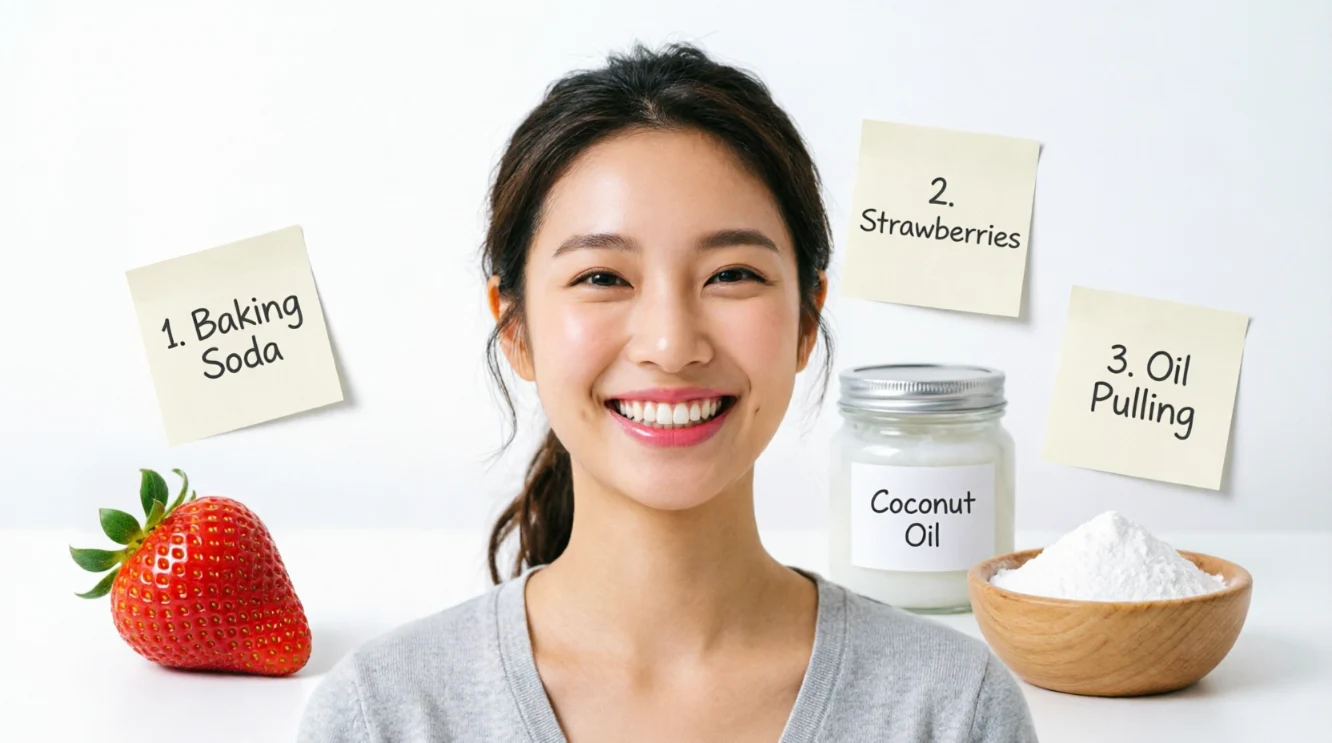
You can make your teeth look cleaner and brighter naturally by brushing twice a day with fluoride toothpaste, cleaning between your teeth, limiting stain-causing foods and drinks, avoiding tobacco, drinking water, and getting regular dental cleanings. These habits mainly remove or prevent surface stains rather than changing the natural color of your teeth.
Key Takeaways
- Natural habits can help remove and prevent surface stains, especially from coffee, tea, tobacco, and plaque.
- Brush gently twice a day with fluoride toothpaste and clean between your teeth daily.
- Lemon juice, vinegar, charcoal, and homemade peroxide mixtures are not good DIY whitening choices.
- Oil pulling has not been shown to reliably whiten teeth.
- If you want noticeable bleaching, talk with a dentist about evidence-based whitening options.
What Does “Natural Teeth Whitening” Really Mean?
When people search for how to whiten teeth naturally, they often expect a kitchen ingredient that can make yellow teeth dramatically whiter.
The reality is a little different.
Your teeth can become darker because of surface stains from coffee, tea, red wine, tobacco, and other strongly colored foods and drinks. Poor oral hygiene can also allow plaque and stains to build up. The American Dental Association (ADA) separates these extrinsic stains from intrinsic discoloration, which develops within the tooth itself.
Natural habits are most useful for keeping the outside of your teeth clean and reducing new stains. They generally cannot change the deeper natural color of a tooth.
That distinction matters because a method that removes surface buildup may make your smile look brighter without actually “bleaching” the tooth.
Surface Stains vs. Natural Tooth Color
Think of your tooth like a white shirt.
If coffee spills onto the shirt, removing the stain can make it look white again. But if the fabric itself has changed color, simply cleaning the surface will not completely restore its original shade.
Teeth work in a somewhat similar way. Surface stains can often be reduced with good oral hygiene, professional cleaning, or appropriate whitening products. Deeper discoloration may require a different approach.
How to Whiten Teeth Naturally: 7 Safer Ways
1. Brush Twice a Day With Fluoride Toothpaste
Start with the most basic habit: brush your teeth twice a day.
The National Institute of Dental and Craniofacial Research recommends fluoride toothpaste and gentle brushing. Fluoride helps protect enamel from tooth decay, while brushing removes plaque and food debris.
Brush for about two minutes each time. Use gentle, small movements rather than aggressively scrubbing your teeth.
Hard scrubbing does not automatically mean whiter teeth. In fact, overly aggressive brushing can harm the tooth surface and irritate your gums.
2. Clean Between Your Teeth Daily
A toothbrush cannot effectively reach every area between your teeth.
Food particles and plaque can collect in these spaces, making your mouth look and feel less clean. Cleaning between your teeth once a day helps remove this buildup.
You can use dental floss or another interdental cleaner that works for you.
This step is not a quick whitening trick, but it supports a cleaner-looking smile and better overall oral hygiene.
3. Limit Foods and Drinks That Cause Stains
Coffee, tea, red wine, cola, and tobacco are well-known contributors to external tooth staining.
You do not necessarily have to eliminate every favorite food or drink.
Instead, consider reducing how frequently you consume heavily staining beverages. Drinking water afterward can also help clear food and drink residue from your mouth.
If you regularly drink coffee or tea, making small changes over time may be more useful than trying an aggressive DIY whitening treatment.
4. Rinse With Water After Staining Foods and Drinks
Water is simple, inexpensive, and useful.
After drinking coffee, tea, or another staining beverage, drinking or rinsing with water can help remove leftover material from your mouth.
It is especially useful when you cannot brush immediately.
However, water is not a bleaching agent. Its main benefit here is helping with general oral cleanliness and reducing the amount of staining material that remains in contact with your teeth.
5. Avoid Tobacco
Smoking and other tobacco use can contribute to tooth discoloration and can negatively affect oral health.
If you use tobacco, stopping can help prevent additional staining while providing many broader health benefits.
This is one of the most practical “natural whitening” strategies because it addresses the cause rather than trying to scrub away the result.
6. Keep Up With Professional Dental Cleanings
Sometimes teeth look yellow or dull because of accumulated plaque, tartar, and surface staining.
A professional dental cleaning can remove buildup that normal brushing cannot completely eliminate.
The ADA notes that professional prophylaxis can reduce certain extrinsic stains.
Regular dental visits also give your dentist a chance to check if discoloration comes from ordinary staining or from another dental problem.
7. Consider an ADA-Accepted Whitening Toothpaste
If you want something more whitening-focused while keeping your routine simple, consider a whitening toothpaste with the ADA Seal of Acceptance.
Whitening toothpastes primarily work by helping remove surface stains. Some also contain low levels of peroxide. They generally do not produce the same type of color change as stronger bleaching treatments.
The ADA Seal indicates that an accepted product has met the program’s requirements for safety and effectiveness.
Can Baking Soda Whiten Teeth?
Baking soda is one of the most common natural teeth-whitening suggestions online.
It can help remove some surface stains because of its cleaning and mildly abrasive properties. However, that does not mean you should aggressively scrub your teeth with baking soda every day.
The ADA has reported that some DIY mixtures have little evidence behind them, and excessive abrasion can damage enamel.
A better approach is to choose a properly formulated oral-care product rather than experimenting with strong homemade mixtures.
If you already have sensitive teeth, worn enamel, gum problems, or dental restorations, ask your dentist before trying DIY whitening.
Do Natural Home Remedies Really Work?
Many online articles recommend ingredients from the kitchen. Unfortunately, “natural” does not automatically mean safe or effective.
Oil Pulling
Oil pulling usually involves swishing coconut, sesame, or another edible oil around the mouth.
Despite its popularity, there is not reliable evidence that oil pulling whiten teeth. The ADA says it should not replace brushing with fluoride toothpaste and flossing.
If you enjoy oil pulling as part of a personal routine, do not treat it as a proven whitening treatment.
Activated Charcoal
Charcoal products are often marketed as natural tooth whiteners.
The problem is that evidence for their whitening effectiveness and safety is limited. The ADA reports concerns about abrasive charcoal products, and excessive abrasion can wear away enamel.
Once enamel wears away, the yellower dentin underneath can become more visible.
Lemon and Other Acidic Foods
Using lemon juice, vinegar, or other acidic ingredients directly on your teeth is a poor DIY whitening strategy.
Acid can weaken or erode enamel, which is the protective outer layer of your teeth. The ADA specifically warns against using acidic household ingredients as whitening treatments.
Enjoy fruit as part of a normal diet, but do not use acidic foods as tooth scrubs.
Hydrogen Peroxide From the Medicine Cabinet
Hydrogen peroxide is genuinely used in formulated teeth-whitening products. However, that does not mean household hydrogen peroxide should be mixed into homemade whitening recipes.
Professional and over-the-counter whitening products are designed with specific concentrations and directions. The ADA identifies peroxide as a common whitening ingredient, while also noting that sensitivity and gum irritation can occur with whitening.
For this reason, avoid improvising with concentrated or homemade peroxide treatments.
How to Whiten Yellow Teeth Naturally
If your teeth look slightly yellow, first consider why.
Natural tooth color varies from person to person. As people age, enamel can become thinner and more translucent, allowing the naturally yellower dentin underneath to show more clearly.
If the yellow appearance mainly comes from surface stains, focus on:
- Brushing twice daily with fluoride toothpaste
- Cleaning between your teeth daily
- Reducing coffee, tea, tobacco, and other common staining sources
- Drinking water regularly
- Maintaining routine dental cleanings
- Considering an ADA-Accepted whitening toothpaste
If the discoloration remains despite good oral care, a dentist can determine if the color comes from deeper discoloration, decay, trauma, medications, aging, or another cause.
When Natural Whitening Is Not Enough
Natural methods have limits.
If you want a significant change in tooth color, evidence-based whitening treatments generally use peroxide-based ingredients such as hydrogen peroxide or carbamide peroxide. These products can address stains that ordinary surface cleaning cannot.
You can find over-the-counter whitening products such as strips and toothpaste, while dentists can provide professional treatments and dentist-supervised at-home options.
Whitening can also cause temporary tooth sensitivity or gum irritation, so follow product directions carefully.
One more important point: whitening changes natural teeth, not tooth-colored restorations such as crowns, veneers, or fillings. If you have dental work in your smile, ask your dentist how whitening could affect the final appearance.
Frequently Asked Questions
Can yellow teeth become white again?
Sometimes, especially when the yellow appearance comes from surface stains. Good oral hygiene, stain prevention, professional cleaning, and appropriate whitening products can improve tooth color. However, naturally yellow or deeply discolored teeth may not become bright white through natural methods alone.
Does oil pulling whiten teeth?
There is no reliable evidence that oil pulling produces meaningful tooth whitening. It should not replace brushing twice daily with fluoride toothpaste or cleaning between your teeth.
Is baking soda safe for whitening teeth?
Baking soda can help with surface stain removal, but using abrasive DIY mixtures too aggressively can harm enamel. A properly formulated toothpaste is generally a more controlled option than repeatedly scrubbing teeth with homemade mixtures.
Can I whiten my teeth naturally overnight?
There is no reliable natural method that can safely transform tooth color overnight. Healthy oral-care habits work gradually, while stronger whitening treatments use specific bleaching ingredients and require appropriate directions or professional guidance.
What is the safest way to whiten teeth at home?
Start with good oral hygiene and stain prevention. If you want actual bleaching, consider an ADA-Accepted over-the-counter product or ask a dentist about an appropriate at-home whitening option.
Conclusion
Learning how to whiten teeth naturally starts with realistic expectations. You can make your smile look cleaner and brighter by brushing twice a day, cleaning between your teeth, limiting staining foods and drinks, avoiding tobacco, drinking water, and maintaining regular dental care.
However, natural ingredients are not magic whitening agents. Lemon, vinegar, charcoal, oil pulling, and homemade peroxide mixtures can be ineffective or potentially harmful.
If you want a noticeably lighter shade, talk with a dentist about evidence-based whitening options. The safest approach is to protect your enamel first and choose a method that matches the actual cause of your tooth discoloration.

Dan Brown is a passionate relationship writer and anniversary message expert at coupleanniversary. With a deep understanding of love, marriage, and meaningful celebrations, he specializes in creating heartfelt anniversary wishes, romantic messages, and thoughtful words that help couples express their emotions perfectly.