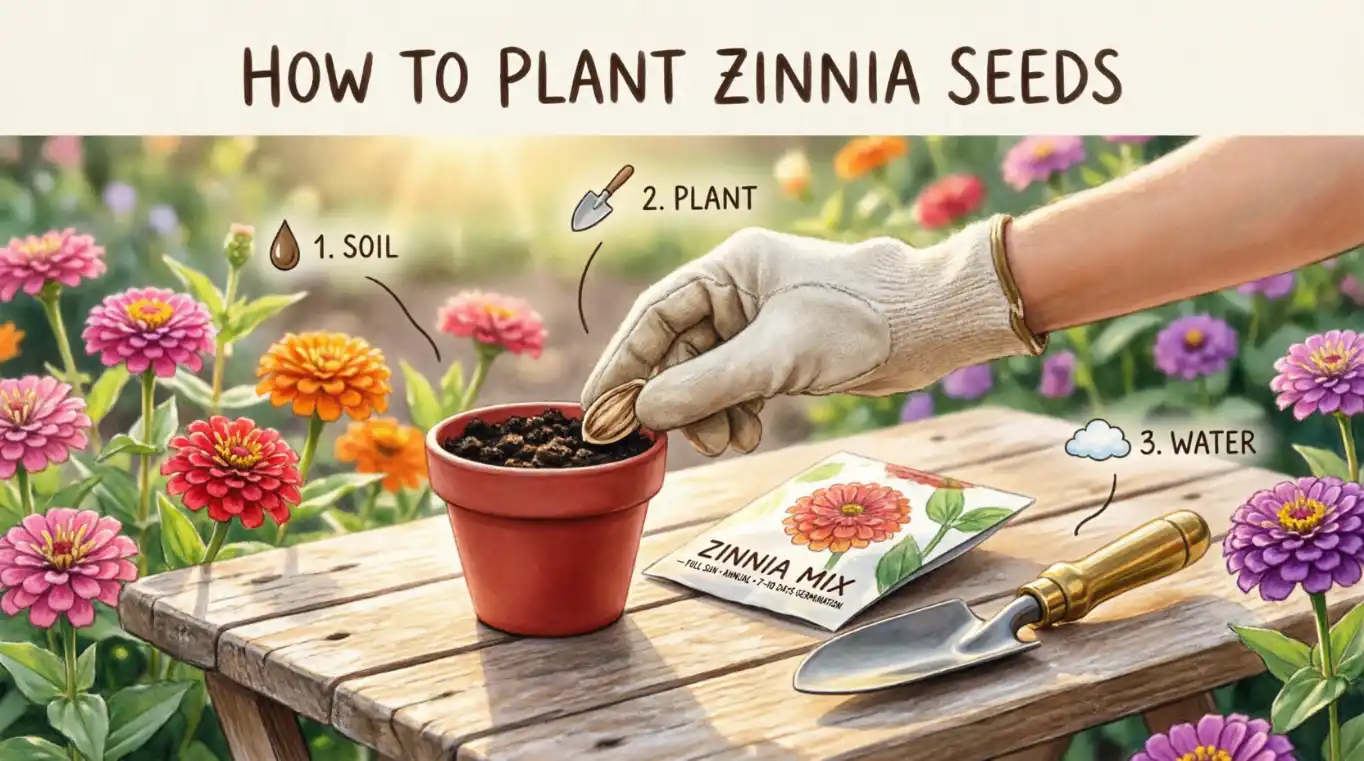
To plant zinnia seeds, choose a sunny spot with well-drained soil and wait until the danger of frost has passed and the soil is warm. Sow seeds about ¼ inch deep, water gently, and keep the soil lightly moist until they sprout. Thin young plants according to the variety’s recommended spacing.
Key Takeaways
- Plant zinnia seeds outdoors after the danger of frost has passed.
- Choose a location with at least 6–8 hours of direct sunlight.
- Sow seeds about ¼ inch deep rather than burying them deeply.
- Keep the soil lightly moist while seeds germinate.
- Thin seedlings once they begin growing so mature plants have enough room.
- You can also start zinnia seeds indoors about 4–6 weeks before outdoor planting.
When to Plant Zinnia Seeds
Zinnias are warm-season annual flowers, so they do best when the weather and soil have warmed up. In most parts of the United States, the easiest approach is to wait until after your area’s last expected frost before sowing outdoors.
Soil temperature matters, too. University of Minnesota Extension recommends direct sowing when soil reaches about 70°F. Botanical Interests similarly recommends outdoor sowing after the average last frost date, with soil around 70–80°F.
In simple terms, don’t rush zinnia seeds into cold spring soil. Warm conditions help them germinate quickly and grow strongly.
Best Time for Outdoor Sowing
For most gardeners, aim to plant zinnia seeds 1–2 weeks after the average last frost date, once the soil has warmed. Your exact planting date will depend on your USDA growing zone and local weather.
If a late cold snap is possible, waiting a little longer is usually better than planting too early. Zinnias are frost-sensitive plants.
Starting Seeds Indoors
If you have a short growing season, you can start zinnia seeds indoors about 4–6 weeks before you expect to plant them outside. Use a clean seed-starting mix and provide warm conditions.
However, zinnias grow quickly, so indoor starting is not always necessary. Direct sowing is often simpler when your outdoor soil is already warm.
How to Plant Zinnia Seeds Outdoors
Follow these simple steps for a strong start.
Step 1: Choose a Sunny Location
Pick a place that receives 6–8 hours of direct sunlight each day. Zinnias perform best in warm, sunny conditions.
Good airflow also matters. Avoid placing plants so close together that air cannot move around their leaves. Crowded, humid conditions can increase disease problems.
University of Minnesota Extension recommends full sun and well-drained soil for zinnias.
Step 2: Prepare the Soil
Remove weeds, grass, rocks, and large clumps from the planting area. Loosen the upper layer of soil and mix in some mature compost if the soil needs organic matter.
You do not need an elaborate soil recipe. The main goal is loose, reasonably fertile, well-drained soil that does not remain waterlogged.
If your garden soil drains poorly, consider a raised bed or container instead.
Step 3: Sow the Seeds
Make a shallow hole or narrow planting line. Place each zinnia seed about ¼ inch deep and cover it lightly with fine soil.
Do not bury the seeds several inches deep. Zinnia planting instructions from University of Minnesota Extension and Burpee both recommend approximately ¼ inch of depth.
If you are sowing several seeds close together for later thinning, leave enough room to handle the young seedlings without damaging them.
Step 4: Water Gently
After planting, water the area gently. You want the soil to become evenly moist without washing the tiny seeds away.
Continue checking the soil regularly. Keep it lightly moist during germination, but avoid keeping it constantly soggy.
Warmth, moisture, air, and good seed-to-soil contact all play important roles in seed germination.
Step 5: Thin the Seedlings
Once several seedlings appear and begin developing, thin them so the strongest plants have enough space.
The exact final spacing depends on the zinnia variety. Some compact varieties need less room, while large, branching varieties require considerably more.
Penn State Extension lists zinnia spacing at roughly 6–12 inches for its annual-seed guidance, while University of Minnesota Extension gives a broader 8–24-inch range depending on plant habit. Always check your seed packet for the variety-specific recommendation.
How Deep Should Zinnia Seeds Be Planted?
Plant zinnia seeds about ¼ inch deep.
That’s shallow enough to let the emerging seedling reach the surface easily while still giving the seed good contact with the soil.
A common mistake is planting flower seeds too deeply. With zinnias, lightly covering the seed is usually enough.
If you are unsure, follow the instructions printed on your specific seed packet because different cultivars can have slightly different recommendations.
How Far Apart Should Zinnias Be Planted?
Spacing depends on the mature size of the variety.
Compact zinnias can usually grow closer together, while tall or bushy varieties need more room for branching and airflow. Some extension recommendations range from about 8 inches to 24 inches depending on the cultivar.
For a home garden, a practical approach is:
| Zinnia type | Approximate spacing |
| Small or compact varieties | 8–12 inches |
| Medium varieties | 12–18 inches |
| Large, branching varieties | 18–24 inches |
Use your seed packet as the final guide because mature plant size varies considerably.
How to Start Zinnia Seeds Indoors
Starting seeds indoors can give you young plants before outdoor conditions become ideal.
Fill small cells or containers with a quality seed-starting mix. Sow the seeds about ¼ inch deep and keep the medium moist.
Provide warmth around 70–75°F during germination. Burpee reports emergence in roughly 7–10 days under these conditions, while University of Minnesota Extension reports germination in about 4–8 days at 70–75°F.
Once seedlings emerge, give them plenty of light. When they are ready to move outdoors, harden them off by gradually exposing them to outdoor conditions for about a week.
Avoid rushing indoor-grown seedlings directly from a protected room into intense outdoor sun and wind. Gradual adjustment helps reduce transplant stress.
How Long Do Zinnia Seeds Take to Germinate?
Under warm, suitable conditions, zinnia seeds can germinate in roughly 4–10 days.
Temperature makes a major difference. Seeds planted in cool soil may take longer or fail to emerge evenly.
If your seeds have not appeared after several days, don’t immediately assume they are bad. Check the soil temperature, moisture level, planting depth, and recent weather.
Also remember that excessive water can create problems. The soil should remain moist, not waterlogged.
How to Care for Zinnia Seedlings
Once your seedlings are established, zinnias are relatively straightforward to maintain.
Give them plenty of sunlight and water when the soil begins to dry. Avoid frequent shallow watering if it leaves the soil constantly wet.
As the plants become larger, maintain reasonable spacing and airflow.
You can also remove faded flowers to encourage continued blooming. University of Minnesota Extension and RHS both recommend removing spent flowers to support additional flowering.
If you want bushier growth, some growers pinch the growing tip when plants are established. This encourages side branching, although the best approach can depend on the variety and if you are growing zinnias for garden display or cut flowers.
Common Mistakes When Planting Zinnia Seeds
Planting Too Early
Cold soil can slow germination. Wait for suitable warmth rather than following a calendar date blindly.
Planting Seeds Too Deep
Zinnia seeds only need light coverage. About ¼ inch is generally sufficient.
Overwatering
Constantly soggy soil can interfere with healthy seedling development. Water gently and allow excess water to drain.
Not Giving Enough Sun
Zinnias are sun-loving plants. A shady location can lead to weaker, less productive growth.
Crowding Seedlings
Tiny seedlings may look harmless when packed together, but mature zinnias need considerably more space. Thin them according to the variety.
Can You Grow Zinnias in Containers?
Yes. Zinnias can grow successfully in containers as long as the container provides adequate drainage, sunlight, and enough room for the selected variety.
Choose a potting mix rather than heavy garden soil. Compact zinnia varieties are particularly convenient for containers, while large varieties need larger pots and more space.
Place the container somewhere sunny and check the soil regularly because pots can dry faster than garden beds.
Frequently Asked Questions
Do you soak zinnia seeds before planting?
You generally do not need to soak zinnia seeds before planting. Sow them directly into suitable soil about ¼ inch deep, then water gently. Warm soil, consistent moisture, and good soil contact are more important for reliable germination.
Can you plant zinnia seeds directly in the ground?
Yes. Direct sowing is one of the simplest ways to grow zinnias. Wait until the danger of frost has passed and the soil is warm, then sow the seeds about ¼ inch deep and keep the surface lightly moist until they emerge.
Do zinnias need full sun?
Yes. Zinnias perform best in full sun. Aim for roughly 6–8 hours of direct sunlight daily. A sunny location also helps support strong growth and abundant flowering.
Should zinnia seeds be covered with soil?
Yes, but only lightly. About ¼ inch of soil is generally enough. Deep planting can make it harder for the young seedling to reach the surface.
How long does it take for zinnia seeds to grow?
Seeds may germinate within about 4–10 days when conditions are warm and suitable. The time until flowers appear varies by variety, weather, and growing conditions. RHS notes that zinnias may flower around 12 weeks after sowing under suitable conditions.
Conclusion
Learning how to plant zinnia seeds is simple once you get the timing and planting depth right. Choose a sunny location, prepare well-drained soil, wait for warm conditions, and sow the seeds about ¼ inch deep. Keep the soil lightly moist while they germinate, then thin the seedlings so they have enough space to mature.
For many gardeners, direct sowing after the danger of frost has passed is the easiest method. If your growing season is short, starting seeds indoors can give you an earlier beginning. With warmth, sunlight, proper spacing, and regular care, those small seeds can develop into colorful summer flowers.

Margaret Mitchell is the expert behind coupleanniversary. Transforming ordinary anniversaries into unforgettable memories. With unmatched insight in love, relationships, and celebration ideas, she guides couples to make every milestone special.