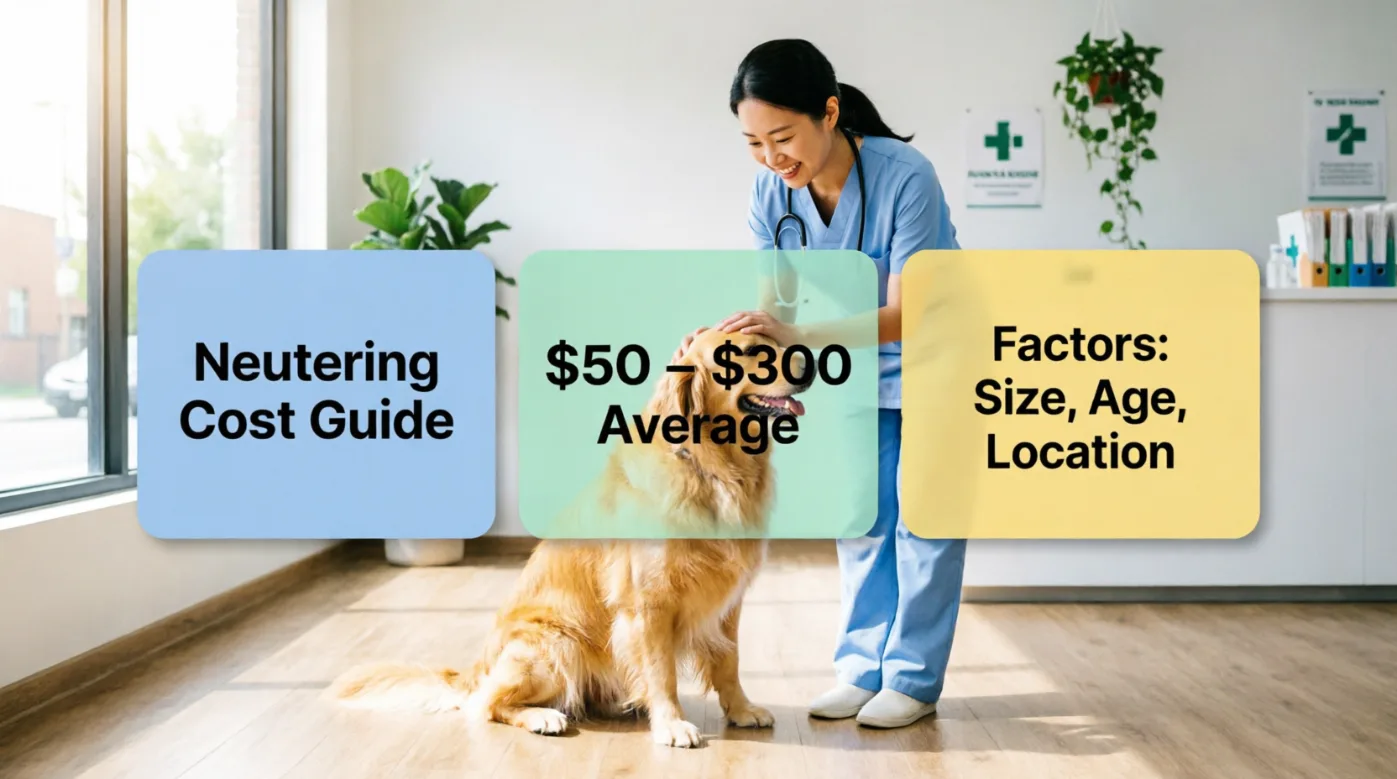
In the U.S., neutering a dog typically costs several hundred dollars. A 2026 CareCredit guide reports an average of about $487, while a Forbes Advisor analysis of Banfield veterinary costs found averages of about $425 for dogs under 6 months and $496 for dogs over 6 months. Your actual price can vary by location, dog size, age, health, and what the clinic includes.
Key Takeaways
- The average U.S. dog neuter costs roughly 425–500, based on recent national cost data.
- Low-cost clinics and animal shelters may offer substantially lower prices.
- Anesthesia, surgery, pain control, and monitoring may be included, but bloodwork and other services can cost extra.
- Larger dogs, older dogs, and dogs with health concerns may require a different estimate.
- Ask for an itemized quote before scheduling the procedure.
How Much Does It Cost to Neuter a Dog?
If you are wondering how much is it to neuter a dog, a reasonable starting budget in the United States is around 400–500 for a routine procedure at a veterinary practice.
Recent national estimates support that general range. CareCredit’s June 2026 guide reports an average neutering cost of $487. Forbes Advisor, using an analysis of Banfield Pet Hospitals’ U.S. veterinary costs, reported an average of approximately $425 for dogs under 6 months and $496 for dogs over 6 months.
However, there is no single nationwide price. One clinic might quote considerably less, while another may charge more because of local veterinary costs, the dog’s size, additional testing, or the services included in the package.
Typical Cost of Neutering a Dog
| Type of service | Approximate cost |
| Low-cost or shelter clinic | Often substantially below private-vet prices |
| Routine private veterinary clinic | Around 400–500 on average |
| More complicated cases | Can cost more than a routine neuter |
| Recent national average | About $487 |
These figures are useful for budgeting, not guaranteed quotes. Always ask the clinic for the current price for your specific dog.
What Is Usually Included in the Neutering Cost?
The biggest mistake owners make is comparing two prices without checking what each price actually covers.
A neutering estimate may include the physical examination, anesthesia, surgery, monitoring, pain medication, and some follow-up care. Another clinic may list some of those services separately.
Pre-Surgery Examination
Before anesthesia, the veterinarian should evaluate your dog’s health and identify factors that could affect the anesthetic plan. AAHA guidelines emphasize a preanesthetic physical examination and an individualized plan based on the patient’s health and procedure.
Some veterinarians may also recommend blood tests before surgery. These tests can help identify problems that could affect anesthesia or medication choices.
Anesthesia and Monitoring
Dog neutering is performed under general anesthesia. Veterinary teams monitor the patient during anesthesia and recovery, with the exact approach depending on the dog’s individual needs.
AAHA recommends continuous monitoring and an individualized anesthesia and pain-management plan.
Because anesthesia and monitoring are important parts of safe surgery, an unusually cheap quote deserves a closer look. Ask what monitoring and pain control are included rather than choosing solely by the lowest number.
Surgery and Pain Control
The actual neutering procedure removes the testicles of a male dog. Veterinary practices may use local anesthetic techniques as part of multimodal pain management, along with other medications before, during, or after surgery.
Your dog may also receive medication to take home after the procedure.
Possible Extra Charges
Ask if your estimate includes:
- Pre-surgery bloodwork
- Examination fees
- IV catheter or fluids
- Anesthesia and monitoring
- Pain medication
- E-collar or recovery cone
- Follow-up examination
- Additional testing
- Treatment for an unexpected medical issue
Getting these details in advance makes it much easier to compare prices fairly.
What Factors Affect the Cost of Neutering a Dog?
Several factors can change the final bill.
Age and Size
A dog’s age and size can affect veterinary pricing. Recent Banfield-based data analyzed by Forbes Advisor showed different average prices for dogs under and over 6 months.
Larger dogs may also require different amounts of medication and anesthesia. Your veterinarian will calculate medications according to your dog’s individual needs.
Health and Medical Needs
A healthy young dog having a routine procedure may have a straightforward estimate. An older dog or one with an underlying medical condition may need additional examination, laboratory testing, stabilization, or other precautions.
AAHA notes that age, underlying disease, patient status, and procedure-related factors all need to be considered when planning anesthesia.
That does not automatically mean an older dog cannot be neutered. It means the veterinarian should evaluate the individual dog before anesthesia.
Location and Type of Clinic
Where you live can have a major effect on veterinary prices. A private full-service veterinary hospital may have different overhead and staffing costs than a dedicated spay/neuter clinic.
That is why a quote from one city should not be treated as the standard price for every U.S. location.
How to Find Low-Cost Dog Neutering
If a 400–500 veterinary bills is difficult for your budget, check for low-cost options before postponing the procedure.
The ASPCA recommends looking for low-cost spay/neuter programs and says owners can use the SpayUSA database to locate providers. Local animal shelters and veterinarians may also know about available programs.
Prices can be much lower at dedicated programs. For example, the ASPCA Spay/Neuter Alliance in Western North Carolina currently lists $65 for a male dog, although eligibility and availability are location-specific.
That example should not be used as a nationwide price. Instead, it shows why checking local shelters and nonprofit clinics can be worthwhile.
Questions to Ask Before Booking
When calling a clinic, ask:
- What is the total price to neuter my dog’s size and age?
- Does the price include anesthesia and monitoring?
- Is the pre-surgery examination included?
- Is bloodwork required or optional?
- Are pain medications included?
- Is a recovery cone included?
- Are follow-up visits included?
- Could there be additional charges?
A written or itemized estimate can help you avoid unexpected expenses.
What Happens After a Dog Is Neutered?
Most dogs go home the same day after a routine neuter, although the exact plan depends on the clinic and the dog’s condition.
Your dog may be sleepy or less interested in food during the first part of recovery. Follow the veterinarian’s instructions carefully, especially regarding medication and activity.
VCA advises restricting activity after neutering; one VCA guide says most dogs can return to normal activity within about five to 10 days, while other VCA surgical guidance recommends longer restrictions depending on the procedure and healing.
Prevent your dog from running, jumping, swimming, or licking the surgical area until your veterinarian says those activities are safe. An E-collar may help stop your dog from chewing or licking the incision.
Contact your veterinarian promptly if you notice swelling, redness, discharge, excessive bleeding, difficulty waking, breathing problems, or an incision that opens.
When Should a Dog Be Neutered?
There is no single age that is right for every dog.
The American Veterinary Medical Association says the appropriate timing for dogs should be individualized. Factors can include breed, age, sex, personality, role, home environment, and health status.
So, instead of choosing an age based only on a general internet rule, discuss your dog’s circumstances with your veterinarian.
This is especially important for owners of large or giant breeds, older dogs, or dogs with medical conditions.
Frequently Asked Questions
How much does it cost to neuter a dog?
A recent 2026 U.S. cost guide puts the average at about $487, while another national analysis reported approximately $425 for dogs under 6 months and $496 for dogs over 6 months. Local prices can be higher or lower depending on the clinic and your dog’s needs.
Is it cheaper to neuter a dog at a shelter?
Often, yes. Animal shelters and dedicated low-cost spay/neuter programs may offer lower prices than private veterinary hospitals. The ASPCA recommends checking local shelters, veterinarians, and low-cost programs for available services.
Does pet insurance cover dog neutering?
Standard pet insurance generally does not automatically cover routine neutering. Some insurers offer optional wellness or preventive-care plans that may provide benefits for spay/neuter procedures. Check your specific policy before assuming the surgery is covered.
How long does a dog take to recover after neutering?
Recovery varies by dog and procedure. Many dogs can gradually return to normal activity within about a week, but activity restrictions may last 10–14 days in some veterinary practices. Follow the specific instructions provided by your veterinarian.
Is neutering more expensive for a large dog?
It can be. Veterinary costs may vary with the dog’s size, age, health, location, and the clinic’s pricing structure. Larger dogs may require different medication amounts and anesthetic considerations, so ask for a quote based on your dog’s current weight.
Conclusion
So, how much is it to neuter a dog? In the U.S., budgeting around 400–500 for a routine procedure is a useful starting point based on recent national estimates, but your actual quote may be different.
Before booking, compare what each clinic includes rather than comparing the headline price alone. Ask about the exam, anesthesia, monitoring, bloodwork, pain medication, follow-up care, and possible additional fees.
If cost is your main concern, check local shelters and low-cost spay/neuter programs. The ASPCA specifically recommends these resources for owners looking for more affordable services.

Dan Brown is a passionate relationship writer and anniversary message expert at coupleanniversary. With a deep understanding of love, marriage, and meaningful celebrations, he specializes in creating heartfelt anniversary wishes, romantic messages, and thoughtful words that help couples express their emotions perfectly.