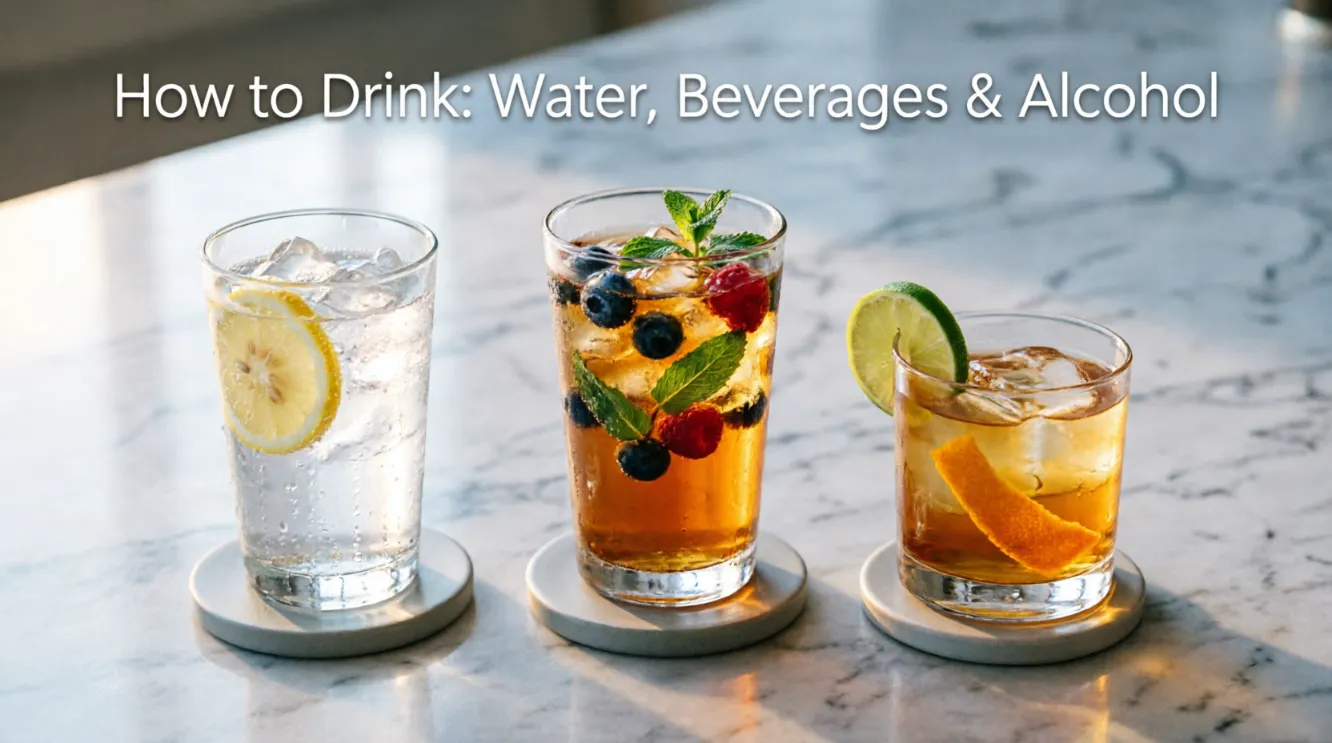
How to drink depends on what you mean. For water and other everyday beverages, drink regularly and adjust your fluid intake for activity, heat, illness, and your individual needs. For alcohol, adults who legally choose to drink should understand drink sizes, alcohol content, and safer choices. There is no single “correct” way to drink every beverage.
Key Takeaways
- Drink water regularly instead of waiting until you become very thirsty.
- Your fluid needs vary with activity, climate, age, health, and other factors.
- Food and beverages besides plain water can contribute to your total fluid intake.
- A U.S. standard alcoholic drink is based on the amount of pure alcohol, not simply the size of the glass.
- The current 2025–2030 U.S. Dietary Guidelines advise consuming less alcohol for better overall health.
What Does “How to Drink” Mean?
The phrase “how to drink” is surprisingly broad.
Someone searching for it might want to know how to drink enough water during the day. Another person may be asking how to drink alcohol responsibly. Someone else may be looking for instructions for a particular beverage, such as whiskey, wine, coffee, or sake.
So, there is no universal drinking method.
For everyday hydration, the goal is to replace fluid your body loses. Water helps regulate body temperature, lubricate joints, remove waste, and maintain normal body functions. Your needs can change depending on weather, physical activity, illness, and other personal factors.
For alcohol, the important questions are different. You need to consider your age, health, medications, the amount of alcohol in a drink, and if drinking could create a safety problem.
How to Drink Water Properly
1. Start With Safe Drinking Water
First, choose water that is safe for drinking.
For many people, plain tap or bottled water works perfectly well. You do not need a special type of water to stay hydrated. The CDC notes that not all tap water needs home filtration, although people with concerns about local water quality should check guidance from their health department or water provider.
Keep a reusable bottle nearby at work, school, while traveling, or during exercise. Making water easy to reach can make drinking regularly much simpler.
2. Drink Regularly Throughout the Day
You do not need to wait until you feel extremely thirsty before drinking.
A simple habit is to take drinks with meals and between meals. Carrying water with you can also make it easier to remember.
There is no special requirement to drink a huge amount at once. When someone is dehydrated, MedlinePlus recommends sipping water and gradually replacing lost fluids.
For example, instead of realizing at 5 p.m. that you have barely had anything to drink, make hydration part of your normal daily routine.
3. Increase Fluids When You Need More
Your water needs are not fixed.
You may need more fluids when you are exercising, spending time in hot weather, sweating heavily, or losing fluids through vomiting or diarrhea. The CDC specifically notes that water needs can rise with heat, physical activity, fever, vomiting, and diarrhea.
Imagine two days:
On a cool day at your desk, your fluid needs may be fairly ordinary. On a hot summer afternoon when you are running outdoors, your body may lose much more water through sweat.
That is why one exact number does not work for everyone.
4. Choose Drinks That Support Hydration
Plain water is an easy choice, but it is not the only beverage that contributes fluid.
The CDC says beverages such as unsweetened tea, coffee, sparkling water, milk, and certain other drinks can contribute to fluid intake. Foods with high water content, including many fruits and vegetables, contribute too.
Still, not every beverage is equally useful as an everyday choice. Sugary drinks can add substantial calories, while water contains no calories.
Try simple changes such as choosing water with meals, adding lemon or lime, or keeping cold water available when you are working.
5. Avoid Forcing Excessive Amounts
More water is not automatically better.
Your body regulates its water balance, and drinking needs vary considerably. The National Academies notes that total water includes drinking water, other beverages, and water from food, and that healthy people can maintain normal hydration across a wide range of intake.
In other words, you do not need to obsess over reaching an identical number every day.
Drink consistently, pay attention to your circumstances, and avoid turning hydration into a contest.
How Much Water Should You Drink?
This is one of the most common questions related to how to drink water.
There is no single amount that fits every person. Mayo Clinic explains that water needs depend on factors such as age, activity level, health, and weather.
Older reference values from the National Academies put adequate total water intake at about 3.7 liters per day for men and 2.7 liters for women, but these figures include water from food and all beverages, not just glasses of plain water. They are also population-based reference values rather than a mandatory target for every individual.
A better approach is to think about your overall fluid intake and adjust it to your situation.
Dark urine, thirst, dry mouth, reduced urination, headache, and dizziness can occur with dehydration. Severe dehydration can be dangerous and requires prompt medical attention.
How to Drink Alcohol Responsibly
The phrase “how to drink” can also refer to alcohol. This requires a different approach.
In the United States, the minimum legal drinking age is 21.
The current 2025–2030 Dietary Guidelines for Americans advise people to consume less alcohol for better overall health. They also identify groups who should completely avoid alcohol, including people who are pregnant, people recovering from alcohol use disorder, and people taking medications or living with medical conditions that can interact with alcohol.
Know the Legal Drinking Age
Only adults who are legally permitted to drink should consume alcohol.
For anyone under 21, drinking alcohol can create legal and health risks. NIAAA identifies 21 as the U.S. minimum legal drinking age.
Understand a Standard Drink
One of the easiest mistakes is assuming that one glass always equals one drink.
In the United States, one standard drink contains about 14 grams, or 0.6 fluid ounces, of pure alcohol. NIAAA gives these common examples:
| Beverage | Approximate amount | Typical alcohol level |
| Regular beer | 12 oz | 5% ABV |
| Table wine | 5 oz | 12% ABV |
| Distilled spirits | 1.5 oz | 40% ABV |
These are examples, not universal serving sizes. A larger pour or a stronger beverage can contain more than one standard drink.
For example, a 12-ounce beer at 10% ABV contains substantially more alcohol than a 12-ounce beer at 5% ABV. The size of the container alone does not tell you how much alcohol you are consuming.
Check the Alcohol Percentage
Look at the ABV, or alcohol by volume.
This matters because two drinks that look almost identical can contain very different amounts of alcohol. Craft beers, cocktails, fortified wines, and other beverages may have significantly different alcohol concentrations.
Knowing the ABV helps you understand what is actually in your glass rather than judging strength by appearance.
Slow Down and Plan Ahead
If you legally drink alcohol, avoid treating speed as the goal.
CDC guidance for people trying to drink less includes drinking slowly, creating longer intervals between drinks, switching to smaller drinks, and breaking up alcoholic drinks with food or nonalcoholic beverages.
Planning ahead also matters. Decide how you will get home before drinking, and do not rely on yourself to make transportation decisions after consuming alcohol.
Never Drink and Drive
Alcohol can impair judgment, coordination, vision, and reaction time.
Never drive after drinking. Arrange a sober driver, rideshare, taxi, or another safe form of transportation.
Also remember that coffee, a cold shower, or walking does not reverse an alcohol overdose. If someone shows signs of a possible alcohol overdose, NIAAA recommends calling 911 immediately rather than waiting for the person to “sleep it off.”
What About Other Drinks?
“How to drink” does not have to mean only water or alcohol.
For coffee and tea, drink them according to your caffeine tolerance and remember that they contribute to fluid intake. The CDC says moderate caffeine consumption can fit into a healthy diet for most adults.
For sports drinks or electrolyte beverages, the need depends on the situation. They can be useful when significant fluid and electrolyte losses occur, but they are not automatically necessary for ordinary daily hydration.
For sugary drinks, keep portions and frequency in mind. Water is a simple way to replace calorie-containing beverages when you do not need the added calories.
For specialty drinks such as whiskey, serving style is usually a matter of preference. Whiskey can be served neat, with water, or over ice, and each method changes the drinking experience.
Common Drinking Mistakes to Avoid
One common mistake is waiting until you are severely thirsty before thinking about hydration.
Another is trying to make up for poor hydration by forcing an enormous amount of water in a short period.
For alcohol, common mistakes include underestimating drink size, ignoring ABV, drinking too quickly, mixing drinking with driving, and assuming a large glass equals only one standard drink.
There is also a simple mistake worth avoiding: thinking every drinking question has the same answer.
Water, coffee, soda, alcohol, and specialty beverages all have different considerations.
When to Pay Attention to Dehydration
Most everyday dehydration can be addressed by replacing lost fluids, but serious symptoms need attention.
Possible signs include intense thirst, very dark urine, reduced urination, dry mouth, dizziness, confusion, rapid heartbeat, and other concerning symptoms. Severe dehydration can become life-threatening.
People who cannot keep fluids down, have significant fluid loss, or have medical conditions that affect hydration should seek appropriate medical advice rather than simply trying to drink more water on their own.
Frequently Asked Questions
How do you drink water properly?
Drink water regularly throughout the day and adjust your intake for heat, exercise, illness, and other factors. You can also get fluids from other beverages and water-rich foods. There is no single drinking schedule that works perfectly for everyone.
Is it better to sip or chug water?
You generally do not need to chug large amounts of water at once. Drinking regularly throughout the day is a practical way to maintain fluid intake. When treating dehydration, MedlinePlus recommends sipping fluids rather than forcing large amounts quickly.
How much is one standard drink?
In the United States, one standard drink contains about 14 grams of pure alcohol. That is approximately 12 ounces of 5% beer, 5 ounces of 12% wine, or 1.5 ounces of 40% distilled spirits. Stronger or larger servings can contain more than one standard drink.
Can you drink too much water?
Yes. Although excessive water intake is not an everyday problem for most healthy people, drinking an unusually large amount can be harmful. Your fluid needs vary, so hydration should not become a race to consume as much water as possible.
What is the safest approach to alcohol?
For people who do not drink, there is no health reason to start. For adults who legally choose to drink, the current U.S. Dietary Guidelines advise consuming less alcohol for better overall health. Some people should avoid alcohol completely because of pregnancy, medications, health conditions, recovery from alcohol use disorder, or difficulty controlling drinking.
Conclusion
Learning how to drink starts with understanding what you are drinking and why.
For water, focus on regular hydration, safe drinking water, and adjusting your fluid intake to your activity, weather, and health needs. You do not need to follow a rigid schedule or force excessive amounts.
For alcohol, the focus should be different: understand alcohol content, recognize standard drinks, follow the law, plan for safe transportation, and remember that consuming less is better for overall health according to the current U.S. Dietary Guidelines.
Once you separate these different meanings, the question becomes much easier to answer: drink according to the beverage, your body’s needs, and the risks involved.

Margaret Mitchell is the expert behind coupleanniversary. Transforming ordinary anniversaries into unforgettable memories. With unmatched insight in love, relationships, and celebration ideas, she guides couples to make every milestone special.