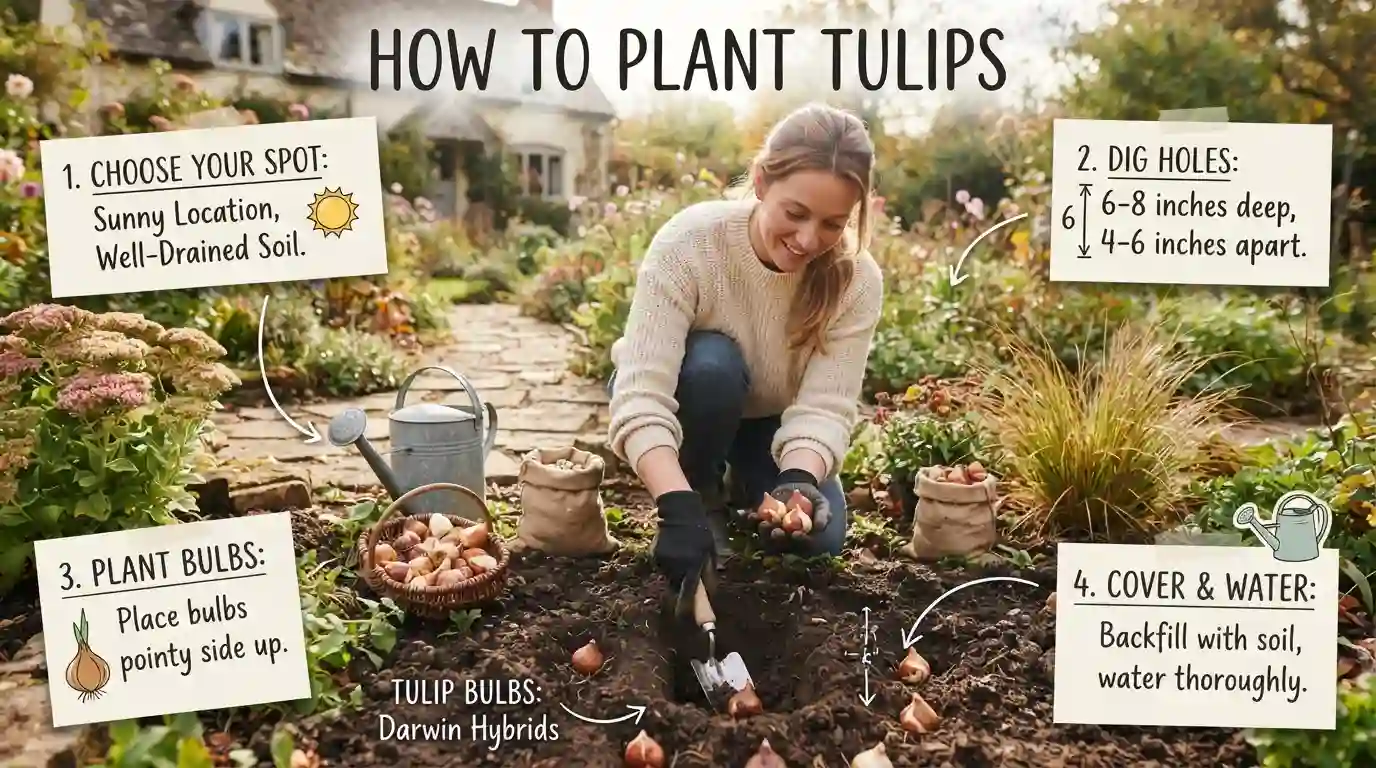
To plant tulips, choose healthy bulbs and plant them in fall after the soil has cooled but before the ground freezes. Place the bulbs pointed end up, usually 6–8 inches deep for standard tulips and 4–6 inches apart. Use well-drained soil, choose a sunny location, cover the bulbs, and water thoroughly after planting.
Key Takeaways
- Plant tulip bulbs in fall, not spring, in most U.S. gardens.
- Choose a location with full sun and well-drained soil.
- Plant most standard tulips about 6–8 inches deep.
- Space most tulip bulbs about 4–6 inches apart.
- Water after planting, then allow the soil to drain well.
- Warm-climate gardeners may need pre-chilled bulbs for successful flowering.
When Is the Best Time to Plant Tulips?
Tulips are spring-flowering bulbs, but the planting work happens in fall. They need time to develop roots before winter and require a period of cold before they can flower properly.
The exact planting date depends on where you live. In colder parts of the United States, gardeners may plant tulips in September or October. In many moderate regions, October or November works well. Gardeners in warmer areas may plant later.
Instead of following the calendar blindly, pay attention to your local conditions. You want the summer heat to have passed, while the soil remains workable.
A Simple U.S. Timing Guide
| Region | Typical planting period |
| Northern states | September–October |
| Midwest and many central states | October–November |
| Southern states | November–December |
| Warm areas with mild winters | Use pre-chilled bulbs and follow local guidance |
These are general windows, not strict dates. Local weather, soil temperature, and your USDA growing zone can shift the ideal time.
What If You Plant Too Early or Too Late?
Planting too early can expose bulbs to warm soil and encourage unwanted early growth. On the other hand, waiting until the ground freezes can make planting difficult and give bulbs less time to establish roots.
If you are running late but the ground is still workable, it is generally better to plant the bulbs than leave them sitting around for months.
Choose the Right Place for Tulips
Before digging your first hole, choose the right location. Good placement makes tulip care much easier.
Sunlight
Most tulips perform best in full sun. Look for an area that receives around six or more hours of direct sunlight during the growing season.
Morning sun is especially useful in warmer areas because it gives plants plenty of light while avoiding some intense afternoon heat.
You can grow tulips in partial shade, but too little light may result in weaker growth and less impressive flowering.
Soil and Drainage
Good drainage is one of the most important parts of growing tulips.
Tulip bulbs do not enjoy sitting in constantly wet soil. Excess moisture can encourage bulb rot and other problems. If your garden has heavy clay or stays wet after rain, improve the planting area before adding bulbs.
Work organic matter into the soil if needed, and consider a raised bed if drainage remains poor.
The goal is simple: moist soil during root development without creating a soggy planting hole.
How to Plant Tulip Bulbs Step by Step
Once you have your bulbs and location ready, planting is straightforward.
1. Choose Healthy Bulbs
Start with bulbs that feel firm and heavy for their size. Avoid bulbs that are soft, badly damaged, shriveled, or covered with obvious mold.
Larger, healthy bulbs generally have more stored energy for producing strong flowers.
If possible, buy bulbs from a reliable garden center, nursery, or established bulb supplier.
2. Prepare the Soil
Remove weeds, grass, rocks, and large pieces of debris from the planting area.
Loosen the soil to the depth needed for the bulbs. If the ground is compacted, break it up so roots can move through the soil easily.
Do not create a small pocket of rich, wet soil surrounded by poorly draining ground. Prepare the entire planting area so water can move away naturally.
3. Dig to the Right Depth
For most standard tulips, aim for about 6–8 inches deep, measured from the base of the bulb to the soil surface.
A useful general rule is to plant a bulb about two to three times its height, although exact recommendations vary by bulb type and soil.
Smaller species tulips may require a shallower planting depth.
If the package supplied with your bulbs gives specific planting instructions, follow those directions.
4. Position the Bulbs Correctly
Place each bulb with the pointed end facing upward and the flatter root end facing downward.
Think of it like planting a tiny arrow toward the sky.
If you accidentally plant one sideways, do not panic. Bulbs have a natural ability to orient their shoots upward. Still, placing them correctly makes the job easier for the emerging stem.
5. Space the Bulbs
For most standard tulips, leave approximately 4–6 inches between bulbs.
You do not have to plant them in a perfectly straight line. In fact, groups and clusters often create a fuller, more natural spring display.
For a strong visual effect, plant several bulbs of the same variety together instead of scattering single bulbs throughout a large bed.
6. Cover and Water
After positioning the bulbs, replace the soil and gently firm it.
Then water the planting area thoroughly once. This helps settle the soil around the bulbs and provides moisture for early root development.
Avoid turning the planting bed into a puddle. Good drainage remains important after watering.
How Deep Should Tulip Bulbs Be Planted?
For most common garden tulips, 6–8 inches deep is a useful target.
The measurement should be taken from the bottom of the bulb to the surface of the soil, not from the pointed tip.
Here is a simple guide:
| Tulip type | Approximate depth |
| Standard hybrid tulips | 6–8 inches |
| Smaller species tulips | 3–5 inches |
| Very small bulbs | Follow package instructions |
Soil type can also affect the final depth. The bulb package should always take priority if it provides a specific recommendation for that variety.
Planting too shallow can leave bulbs more exposed to temperature changes and animals. Planting too deeply, however, can make emergence more difficult.
How Far Apart Should Tulips Be Planted?
Most standard tulips can be spaced about 4–6 inches apart.
Spacing depends partly on the look you want.
For a bold garden display, use groups or drifts. For a more natural appearance, distribute different groups around the bed.
Smaller species tulips can generally be planted closer together than large hybrid varieties.
Remember that spacing is not only about appearance. Each bulb needs room to develop roots, leaves, and flowers without excessive competition.
How to Plant Tulips in Pots
You do not need a large garden to enjoy tulips. Containers work very well.
Choose a pot with drainage holes. This is essential because excess water needs somewhere to escape.
Fill the container with quality potting mix, then place the bulbs at the depth recommended for their type. In a container, you can create a fuller display by grouping bulbs more closely than you would in a permanent garden bed, while still avoiding direct bulb-to-bulb crowding.
Point the bulbs upward, cover them with potting mix, and water the container after planting.
The pot also needs exposure to the cold period required by the bulbs unless you purchased bulbs that have already been properly chilled.
In very cold areas, protect containers from extreme temperature swings. A container above ground can experience colder conditions than bulbs planted in the ground.
What to Do After Planting Tulips
Once your bulbs are planted, they need surprisingly little attention.
Keep the soil from becoming excessively dry during the rooting period, especially if rainfall is limited. At the same time, avoid frequent heavy watering in poorly drained soil.
In colder areas, a layer of mulch can help moderate soil temperature and protect the planting area from repeated freezing and thawing.
Then wait.
During winter, the bulbs develop roots and receive the cold exposure needed for spring growth. When temperatures rise, shoots will eventually push through the soil.
After the tulips bloom, remove faded flowers if you want to prevent energy from going into seed production. Do not cut the green leaves immediately. Allow the foliage to turn yellow and die back naturally because the leaves help replenish the bulb for the next growing season.
Common Tulip Planting Mistakes
Planting in Spring
Tulips are normally planted in fall because they need a cold period for successful flowering. Spring-planted bulbs may produce disappointing results.
Using Poorly Drained Soil
Constantly wet soil can cause bulbs to rot. Improve drainage before planting instead of trying to fix the problem later.
Planting Too Shallow
Shallow bulbs are more exposed to temperature changes and may be easier for animals to disturb.
Forgetting Which End Goes Up
Place the pointed end upward. It is a small detail, but it makes planting correctly much easier.
Cutting Leaves Too Soon
After flowering, resist the urge to remove green foliage immediately. Let the leaves naturally fade before cutting them back.
Expecting Every Tulip to Return Forever
Some tulips return reliably for several years, while others are commonly treated as seasonal displays. Species tulips and certain perennializing varieties can be better choices when long-term return is important.
Frequently Asked Questions
When should I plant tulip bulbs?
Plant tulip bulbs in fall after the summer heat has passed and before the ground freezes. The exact timing depends on your region, climate, and soil conditions.
How deep should I plant tulip bulbs?
Most standard tulip bulbs should be planted about 6–8 inches deep. Smaller species tulips are often planted shallower. Always check the instructions for your specific variety.
Which way should tulip bulbs face?
Place tulip bulbs with the pointed growing end facing upward and the flatter root end facing downward.
Do tulips need full sun?
Most tulips grow best in full sun. Aim for roughly six or more hours of direct sunlight for strong growth and flowering.
Can I plant tulips in pots?
Yes. Tulips grow well in containers as long as the pot has drainage holes, the bulbs receive their required cold period, and the container does not remain waterlogged.
Can I plant tulips in warm climates?
Yes, but gardeners in warm regions may need pre-chilled tulip bulbs because natural winter temperatures may not provide enough cold exposure for normal flowering.
Should I water tulip bulbs after planting?
Yes. Give newly planted bulbs a thorough watering to settle the soil and provide moisture for root development. After that, avoid keeping the soil constantly wet.
Do tulips come back every year?
Some tulips return for several years, while many modern hybrid tulips perform best when replanted periodically. Species tulips and some perennializing varieties are more likely to return and multiply under suitable conditions.
Conclusion
Learning how to plant tulips is much easier than it may first seem. Choose healthy bulbs, wait for the right fall planting window, select a sunny location with good drainage, and plant each bulb at the proper depth with its pointed end facing upward.
For most standard tulips, remember the simple numbers: 6–8 inches deep and 4–6 inches apart. Water after planting, protect the bed from extreme conditions when necessary, and let the foliage naturally die back after flowering.
With a little preparation in fall, you can turn a quiet garden bed or container into a colorful spring display.