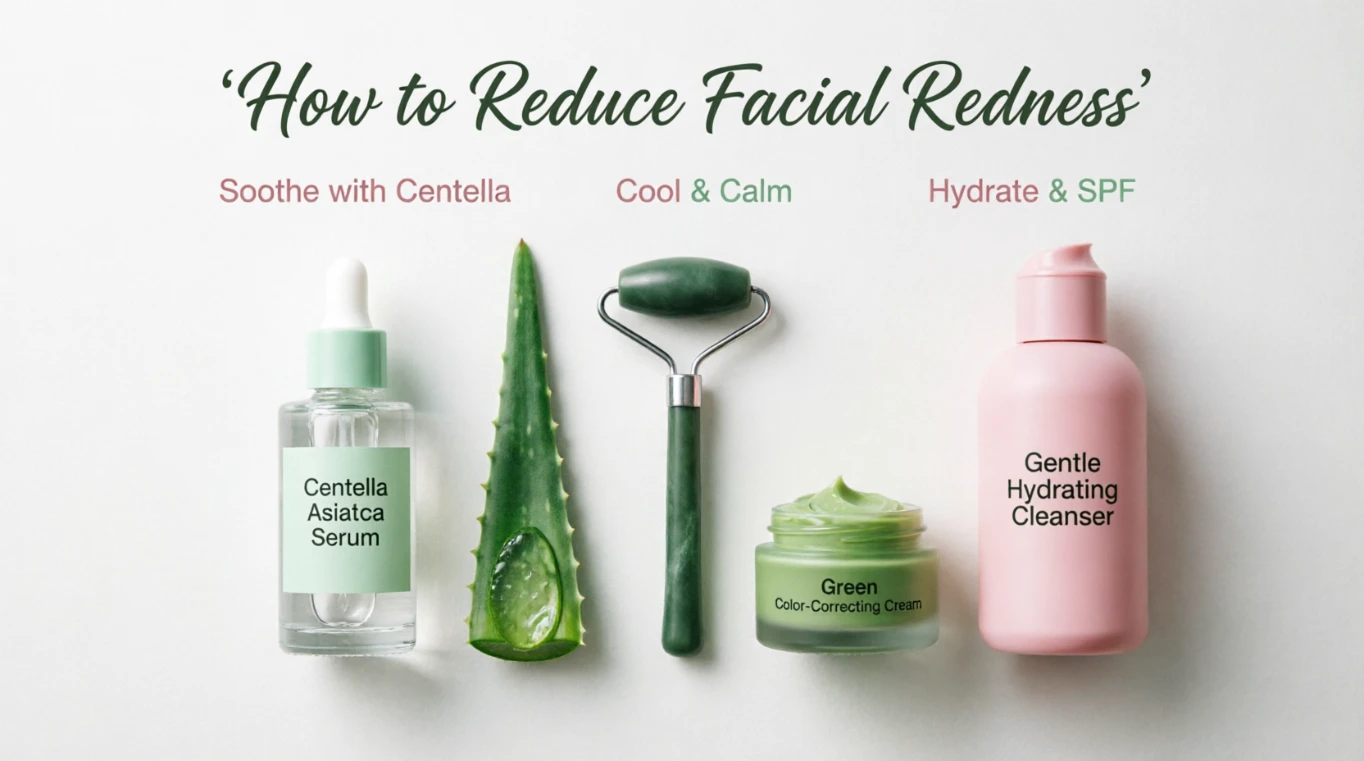
To reduce redness on your face, start by using a gentle, fragrance-free cleanser and moisturizer, avoid products that sting or irritate your skin, and protect your face from the sun with broad-spectrum SPF 30 or higher. A cool compress may temporarily soothe flushed skin. If redness keeps returning or lasts for weeks, see a dermatologist to identify the cause.
Key Takeaways
- Facial redness can come from irritation, sun exposure, rosacea, eczema, acne, or other skin conditions.
- A gentle skincare routine can help calm sensitive, irritated skin.
- Avoid scrubs, harsh products, fragrance, and other personal triggers.
- Daily sun protection is especially important for redness-prone skin.
- Persistent or unexplained redness deserves professional evaluation.
What Causes Redness on the Face?
A red face does not always mean you have rosacea. Your skin can become red when it reacts to heat, sunlight, skincare products, allergies, inflammation, or other conditions.
The American Academy of Dermatology lists several possible causes, including rosacea, contact dermatitis, eczema, psoriasis, seborrheic dermatitis, acne, medication reactions, and sun-related damage.
Sometimes the redness is temporary. For example, your cheeks may become flushed after exercise, heat, embarrassment, or exposure to very cold weather. In other cases, the redness may keep returning or remain visible for a long time.
That difference matters because the best way to reduce redness depends on what is causing it.
Common Causes of Facial Redness
Here are some common possibilities:
| Possible cause | What you may notice |
| Skin irritation | Burning, stinging, dryness, or redness after a product |
| Rosacea | Repeated flushing, persistent redness, visible vessels, or bumps |
| Sun exposure | Red, warm, tender skin after too much UV exposure |
| Eczema | Dry, itchy, inflamed, or scaly skin |
| Contact dermatitis | Itchy or burning rash after contact with an irritant or allergen |
| Acne | Redness around inflamed pimples |
| Seborrheic dermatitis | Redness with greasy or flaky areas, often around the nose, eyebrows, or scalp |
Contact dermatitis can occur when something irritates your skin or triggers an allergic reaction. Finding and avoiding the trigger is an important part of treatment.
Signs That Redness May Be Rosacea
Rosacea commonly causes facial flushing and redness, particularly around the cheeks and nose. Some people also develop visible blood vessels, burning or stinging, and acne-like bumps.
If your face repeatedly becomes red without an obvious reason, or the redness gradually becomes more persistent, consider talking with a dermatologist rather than treating it as ordinary sensitive skin.
How to Reduce Redness on Face
1. Use a Cool Compress
If your face suddenly feels hot or flushed, a cool, damp cloth can provide temporary soothing relief.
Place a clean cloth soaked in cool water over the affected area for several minutes. Avoid putting ice directly against your skin because extreme cold can irritate or injure sensitive skin.
A cool compress does not treat the underlying cause, but it can make temporarily irritated skin feel more comfortable.
2. Stop Using Irritating Products
Look at what you have recently put on your face.
A new cleanser, serum, exfoliant, mask, fragrance, or makeup product could be contributing to the problem. Even a product you have used for years can sometimes become a source of irritation or allergy.
For redness-prone skin, the American Academy of Dermatology recommends choosing gentle, fragrance-free products and avoiding common irritants such as alcohol, camphor, menthol, glycolic acid, lactic acid, and sodium lauryl sulfate when these ingredients trigger irritation.
When your skin is already red, simpler is usually better.
3. Choose a Gentle Cleanser
Washing your face too aggressively can make irritated skin feel worse.
Use a mild, non-soap cleanser and wash gently with your fingertips. Avoid scrubbing with washcloths, facial brushes, or rough exfoliating tools.
The AAD recommends gentle cleansing twice daily for people with rosacea-prone skin and advises patting the face dry rather than rubbing it.
You do not need a complicated cleansing routine. The goal is simply to remove dirt and excess oil without creating more irritation.
4. Moisturize to Support the Skin Barrier
A good moisturizer can be an important part of managing red, sensitive skin.
Choose a fragrance-free moisturizer designed for sensitive skin. Applying moisturizer after cleansing can help reduce dryness and make irritated skin feel more comfortable. Dermatologists also recommend barrier-repair moisturizers for people with rosacea-prone skin.
If a moisturizer burns or stings noticeably, stop using it rather than assuming that the discomfort means it is working.
5. Wear Sunscreen Every Day
Sun exposure can worsen facial redness, particularly in people with rosacea.
Use a broad-spectrum sunscreen with SPF 30 or higher every day. If sunscreen tends to irritate your skin, dermatologists often recommend fragrance-free mineral formulas containing zinc oxide, titanium dioxide, or both.
You can also reduce sun exposure by seeking shade and wearing a wide-brimmed hat.
This step matters even when the sky looks cloudy because UV exposure can still reach your skin.
6. Identify Your Personal Triggers
If redness keeps coming back, start paying attention to what happens before each flare-up.
For example, you might notice redness after:
- Hot weather
- Sun exposure
- Hot drinks
- Spicy foods
- Alcohol
- Exercise
- Stress
- Cold or windy weather
- A particular skincare product
Rosacea triggers vary from person to person, so keeping a simple record can help you recognize your own pattern.
You do not necessarily need to avoid everything on a general trigger list. Instead, focus on the things that clearly make your symptoms worse.
7. Avoid Scrubbing and Over-Exfoliating
Exfoliation can seem like a good way to improve rough or uneven skin, but irritated skin often needs less, not more.
If your face is red, burning, or stinging, pause harsh scrubs and other irritating exfoliation. The AAD specifically advises people with rosacea to avoid rubbing, scrubbing, or massaging affected skin.
Give your skin time to settle before adding strong active products back into your routine.
8. Use Makeup to Temporarily Camouflage Redness
Makeup can reduce the appearance of redness while you work on the underlying cause.
A green-tinted concealer can help visually neutralize red tones. The AAD notes that green-tinted makeup can camouflage redness across different skin tones.
However, choose products that do not sting or trigger more irritation. Makeup can cover redness, but it does not treat conditions such as rosacea or dermatitis.
9. Consider Dermatologist-Recommended Treatment
If facial redness comes from an underlying condition, skincare alone may not be enough.
For example, people with rosacea may receive prescription treatment depending on their symptoms. For persistent facial redness associated with rosacea, dermatologists may also use FDA-approved topical medications such as brimonidine or oxymetazoline in appropriate adults. These treatments temporarily reduce persistent redness rather than curing rosacea.
Your treatment should match the diagnosis. That is why persistent redness is worth discussing with a dermatologist instead of repeatedly trying different products.
A Simple Routine for Red, Sensitive Skin
You do not need ten products to create a redness-friendly routine.
Morning Routine
- Gently cleanse your face.
- Apply a fragrance-free moisturizer if needed.
- Apply broad-spectrum SPF 30 or higher.
- Use gentle makeup if you want additional coverage.
Evening Routine
- Remove makeup gently.
- Cleanse with a mild cleanser.
- Apply your dermatologist-recommended treatment if you have one.
- Finish with a gentle moisturizer.
The American Academy of Dermatology recommends moisturizing after cleansing and emphasizes gentle products for rosacea-prone skin.
What Should You Avoid When Your Face Is Red?
When your skin is irritated, avoid experimenting with several new products at once.
Be especially cautious with:
- Harsh scrubs
- Strong exfoliating products
- Fragranced skincare
- Alcohol-based products
- Very hot water
- Aggressive facial massage
- Products that repeatedly sting or burn
- Known personal triggers
Also, do not automatically use a steroid cream on your face just because it reduces inflammation elsewhere on the body. The AAD notes that using hydrocortisone for longer than directed can itself cause a skin reaction.
When Should You See a Dermatologist?
Make an appointment if facial redness is persistent, repeatedly returns, becomes more noticeable, or comes with bumps, scaling, significant itching, burning, pain, or visible blood vessels.
A dermatologist can help distinguish rosacea from conditions that can look similar, including acne and dermatitis.
If you develop a severe allergic reaction with significant facial swelling or breathing difficulty, seek urgent medical care rather than relying on skincare remedies.
Eye symptoms deserve particular attention if rosacea is suspected. A painful red eye, blurred vision, light sensitivity, or a gritty feeling can require urgent evaluation.
Frequently Asked Questions
How can I reduce redness on my face quickly?
For temporary irritation or flushing, try a cool, damp compress and stop using products that sting or irritate your skin. Follow with a gentle moisturizer if your skin tolerates it. For ongoing redness, the fastest effective approach depends on the underlying cause, so persistent symptoms should be evaluated by a dermatologist.
Does moisturizer help facial redness?
Yes, a suitable moisturizer can help red, sensitive skin feel more comfortable by supporting hydration and the skin barrier. Choose a fragrance-free product made for sensitive skin. If a moisturizer burns or causes more redness, discontinue it and consider asking a dermatologist for a product recommendation.
Can ice reduce redness on the face?
Extreme cold can irritate or injure sensitive skin, so avoid placing ice directly on your face. A cool, damp cloth is a gentler option for temporarily soothing flushed or irritated skin. If redness keeps returning, cooling your face will not address the underlying cause.
How do I know if redness is rosacea?
Rosacea often causes repeated flushing or persistent redness, particularly around the cheeks and nose. Some people also develop visible blood vessels, burning or stinging, and acne-like bumps. Because several skin conditions can look similar, a dermatologist can help determine if rosacea is actually responsible.
What sunscreen is best for redness-prone skin?
Look for a broad-spectrum sunscreen with SPF 30 or higher. If regular sunscreen irritates your skin, the American Academy of Dermatology recommends considering fragrance-free mineral sunscreen containing zinc oxide, titanium dioxide, or both.
Conclusion
Learning how to reduce redness on the face starts with understanding why your skin is red. Temporary flushing may settle with gentle care, while recurring redness can point to rosacea, dermatitis, eczema, sun damage, or another condition.
Start with the basics: use a gentle cleanser, moisturize, avoid irritating products, protect your skin from the sun, and pay attention to your personal triggers. A cool compress can provide temporary comfort when your skin feels hot or flushed.
If redness persists, repeatedly returns, or comes with other symptoms, getting the right diagnosis is more useful than continually trying new skincare products.

Margaret Mitchell is the expert behind coupleanniversary. Transforming ordinary anniversaries into unforgettable memories. With unmatched insight in love, relationships, and celebration ideas, she guides couples to make every milestone special.