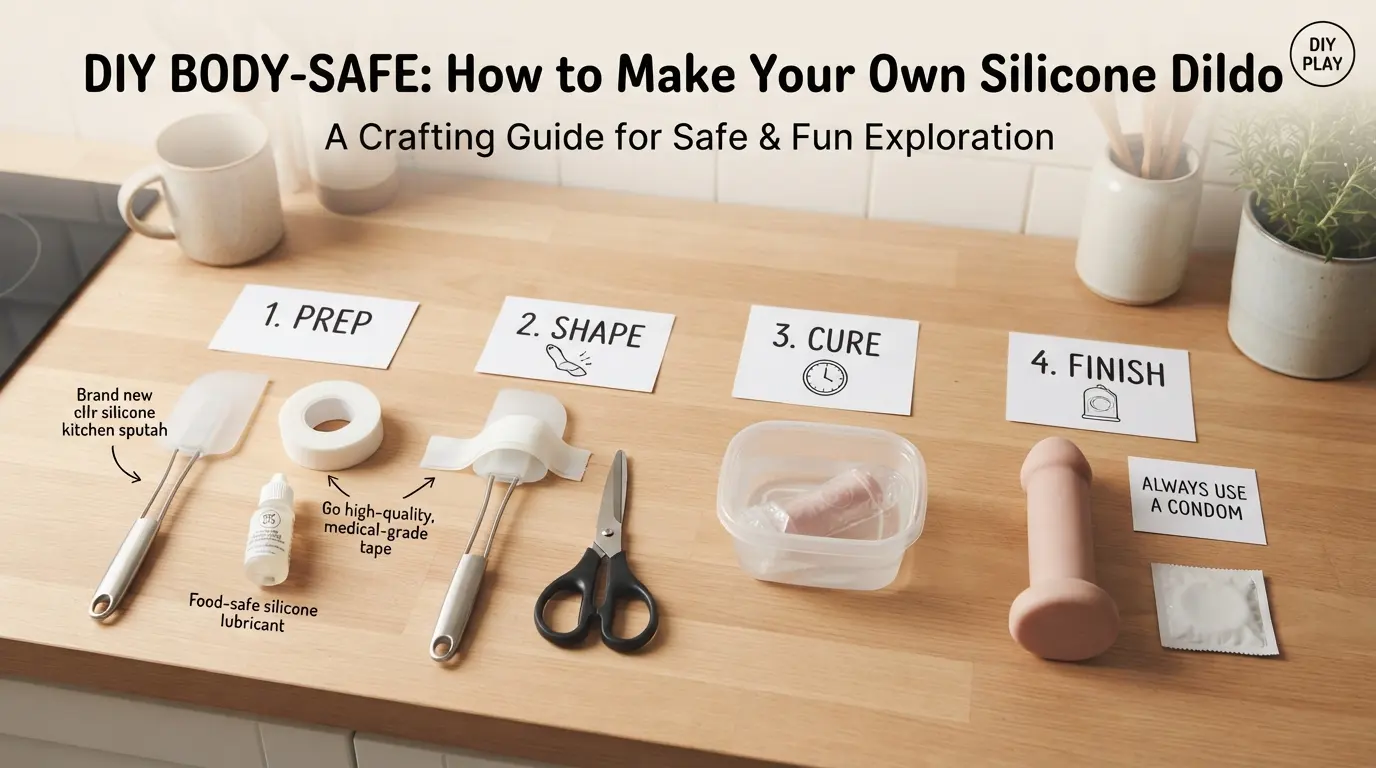
To make a dildo, choose a body-safe material like platinum-cure silicone, clay, or 3D-printed resin. Create a mold from a model, cast the material, and ensure a flared base for safety. Always use non-porous, phthalate-free materials and clean your finished toy thoroughly before use.
Key Takeaways
- Body-safe materials like platinum-cure silicone, clay, and medical-grade resin are essential for a safe DIY dildo.
- You can make a dildo using silicone casting, clay modeling, or 3D printing.
- A flared base is critical for safety if you plan to use the dildo annually.
- Always clean your homemade dildo with warm water and mild soap or a toy cleaner.
- Avoid porous materials like PVC, jelly rubber, and TPE, which can harbor bacteria.
Why Make Your Own Dildo?
Making your own dildo can be a fun, creative, and empowering project. You get to control the size, shape, texture, and firmness. It can also be more affordable than buying a custom toy. For some, it’s about exploring sexuality in a personal way. For others, it’s simply a DIY challenge.
Whatever your reason, the most important thing is safety. A homemade dildo must be made from body-safe materials and cleaned properly. This guide walks you through three safe methods: silicone, clay, and 3D printing.
Safety First: Body-Safe Materials Explained
Before you start, you need to understand what makes a material safe for internal use.
What Makes a Material Body-Safe?
A body-safe material is non-porous, free of phthalates, and easy to clean. Non-porous means bacteria, viruses, and mold cannot soak into the material. It also means you can sanitize it thoroughly.
The gold standard for dildos is platinum-cure silicone. It is non-porous, boilable, and hypoallergenic. Other safe options include medical-grade resin, glazed ceramic, and stainless steel. For DIY projects, silicone and clay are the most accessible.
Materials to Avoid
Never use these materials for a dildo:
- PVC (vinyl): Often contains phthalates and is porous.
- Jelly rubber: Porous and may contain harmful chemicals.
- TPE/TPR: Porous and cannot be fully sanitized.
- Wood: Porous unless sealed with a body-safe finish, which is hard to guarantee.
- Glass: Only kiln-fired, annealed borosilicate glass is safe; craft glass is not.
If you use questionable material, always cover the dildo with a condom. But it’s better to choose a safe material from the start.
Method 1: How to Make a Silicone Dildo (Best Overall)
Silicone is the best choice for a homemade dildo. It’s body-safe, durable, and can be boiled to sterilize.
Supplies You’ll Need
- Platinum-cure silicone (two-part kit, skin-safe)
- A model (your desired shape, made from clay or 3D printed)
- Mold-making silicone (for the negative mold)
- A mold box (plastic container)
- Mixing cups and stir sticks
- Gloves
- A flared base (you can mold this into the design)
- Release agent (if needed)
Step-by-Step Instructions
- Create your model. Sculpt your desired dildo shape from clay. Add a flared base at the bottom. Make it smooth.
- Build a mold box. Place the model in a plastic container. Leave at least 1/2 inch of space around it.
- Pour mold-making silicone. Mix according to the kit instructions. Pour it over the model until fully covered. Let it cure for 24 hours.
- Remove the model. Cut the mold open carefully. Remove the clay model.
- Prepare the mold. Clean it and apply a release agent if recommended.
- Mix and pour platinum-cure silicone. Follow the kit instructions precisely. Pour into the mold.
- Cure. Let it cure for the time specified (usually 24 hours).
- Demold and clean. Remove the dildo. Wash with warm water and mild soap.
Method 2: How to Make a Clay Dildo
Clay is the easiest DIY method. It’s great for a first project. However, you must seal it properly.
Supplies You’ll Need
- Polymer clay (like Fimo or Sculpey)
- Body-safe sealant (food-grade epoxy or resin)
- Sandpaper (fine grit)
- Oven (for baking)
Step-by-Step Instructions
- Sculpt your shape. Mold the clay into your desired dildo shape. Add a flared base.
- Bake the clay. Follow the clay package instructions. Let it cool.
- Sand smooth. Use fine-grit sandpaper to smooth any rough spots.
- Seal the clay. Apply a body-safe, non-porous sealant. Let it cure fully.
- Clean before use. Wash with warm water and mild soap.
Important: Only use clay that is labeled non-toxic and bake it properly. The sealant must be fully cured and body-safe. If you’re unsure, cover with a condom.
Method 3: How to Make a 3D-Printed Dildo (Most Customizable)
3D printing lets you create highly custom shapes. But you must use the right materials and post-process carefully.
Supplies You’ll Need
- 3D printer (FDM or resin)
- Body-safe filament/resin (e.g., PLA is not body-safe; use medical-grade resin)
- Sanding tools
- Body-safe sealant (food-grade epoxy)
- Condoms (for extra safety)
Step-by-Step Instructions
- Design your dildo. Use 3D modeling software. Include a flared base.
- Print your design. Use a body-safe resin or filament. Note: FDM prints have layer lines that harbor bacteria. Resin prints are smoother.
- Post-process. Sand the print until smooth. Wear a mask.
- Seal the print. Coat with a body-safe, non-porous sealant. Let it cure.
- Clean thoroughly. Wash with warm water and mild soap.
Safety Note: Even with sealing, 3D-printed toys can be risky because of layer lines. Always use a condom. Consider this method for external use only unless you are confident in your sealing process.
Comparison of DIY Dildo Materials
| Material | Body-Safe? | Difficulty | Cost | Best For |
| Platinum-cure silicone | Yes | Moderate | $$$ | Best overall, durable, boilable |
| Polymer clay + sealant | Yes (if sealed) | Easy | $ | Beginners, custom shapes |
| 3D-printed resin + sealant | Yes (if sealed) | Advanced | $$ | Highly custom designs |
| PVC, jelly, TPE | No | N/A | $ | Avoid |
How to Make Your Dildo Harness-Compatible
A harness-compatible dildo needs a flared base. The base should be wider than the shaft so it stays in the harness. When designing your dildo, make the base at least 1.5 to 2 inches wide. This also prevents the dildo from getting lost inside the body during anal play.
If your dildo doesn’t have a flared base, you can add one by molding a wider base or attaching a silicone ring. Never use a dildo annually without a flared base.
Cleaning and Caring for Your Homemade Dildo
Proper cleaning is essential.
- Silicone: Wash with warm water and mild soap. Boil for 5 minutes to sterilize.
- Clay (sealed): Wash with warm water and mild soap. Do not boil.
- 3D-printed: Wash with warm water and mild soap. Use a condom every time.
- Always: Dry thoroughly. Store in a clean, dry place. Check for cracks or wear before each use.
Use water-based lubricant with silicone toys. Silicone-based lube can degrade silicone.
Frequently Asked Questions
Is it safe to make your own dildo?
Yes, if you use body-safe, non-porous materials like platinum-cure silicone or properly sealed clay. Avoid porous materials like PVC, jelly rubber, and TPE. Always clean your dildo before and after use.
What is the best material for a homemade dildo?
Platinum-cure silicone is the best. It’s non-porous, boilable, hypoallergenic, and durable. Clay with a body-safe sealant is a good beginner option. 3D-printed resin works if sealed and covered with a condom.
Can you make a dildo out of household items?
You should not use household items like vegetables, candles, or tools. They are not body-safe, can break, and may cause injury. Always use materials designed for body contact.
How do you make a dildo mold?
Create a model of your desired shape from clay or 3D print it. Place it in a mold box. Pour mold-making silicone over it. Let it cure, then cut the mold open and remove the model. The negative space is your mold.
Can you 3D print a dildo?
Yes, but you must use body-safe resin and seal it with a food-grade epoxy. FDM prints have layer lines that harbor bacteria. Always use a condom with 3D-printed toys. Resin prints are smoother but still require sealing.
Final Thoughts
Making your own dildo can be a rewarding DIY project. The key is safety. Choose a body-safe material, include a flared base, and clean your toy properly. Silicone is the best overall choice, while clay is easiest for beginners. 3D printing offers the most customization but requires extra care.
Always prioritize your health. If you’re unsure about a material, use a condom. And remember: a homemade dildo is only as safe as the materials and methods you use.

Dan Brown is a passionate relationship writer and anniversary message expert at coupleanniversary. With a deep understanding of love, marriage, and meaningful celebrations, he specializes in creating heartfelt anniversary wishes, romantic messages, and thoughtful words that help couples express their emotions perfectly.