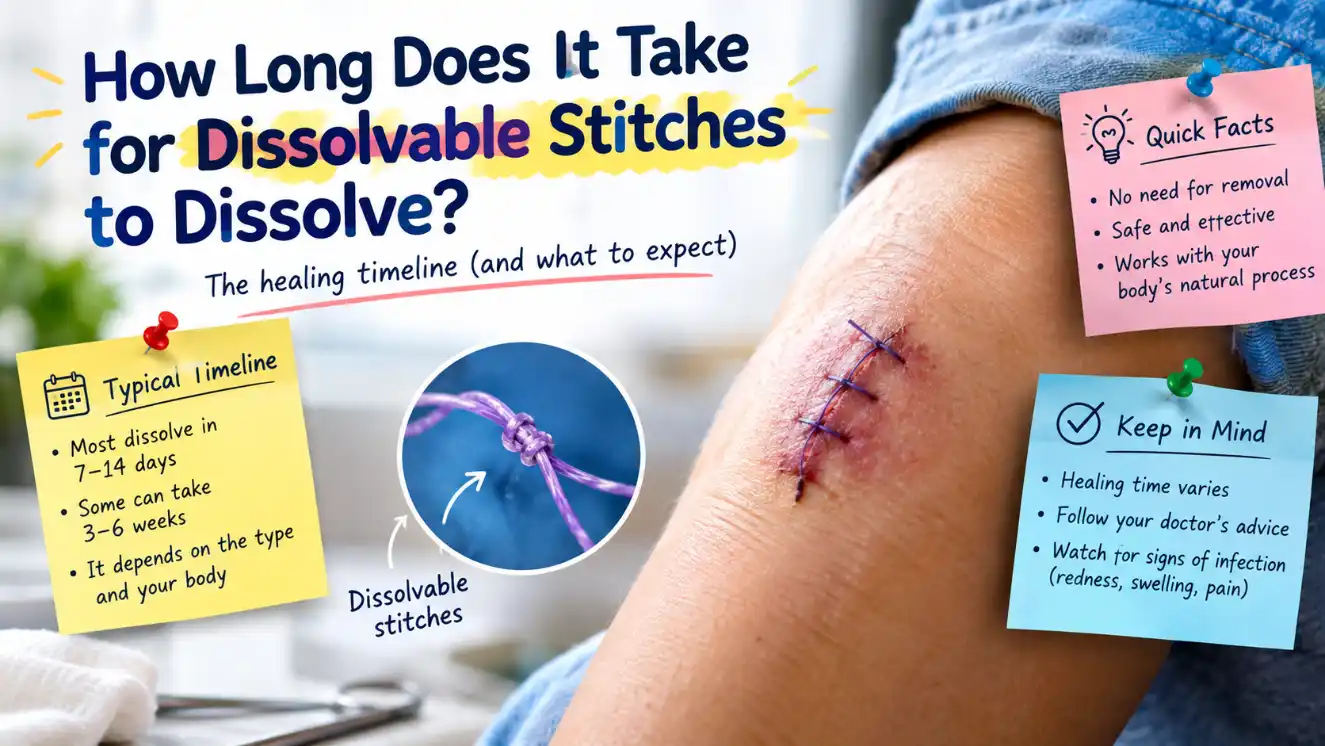
If you’ve recently had a cut stitched up, a mole removed, or a surgical incision closed, you may have been sent home with dissolvable stitches instead of the kind that need to be removed at a follow-up visit. It’s natural to wonder exactly how long they’ll take to disappear, and if what you’re seeing during the healing process is normal.
The honest answer is that it depends. Dissolvable stitches can break down in as little as a week or take several months, depending on the material used, where they were placed, and how your body heals. There isn’t one single timeline that applies to everyone.
In this guide, you’ll learn how dissolvable stitches actually work, typical timeframes for different situations, what affects how quickly they break down, and how to care for them properly. We’ll also cover signs that something isn’t right and when it’s time to call your doctor.
Understanding Dissolvable Stitches
Before looking at timelines, it helps to understand what dissolvable stitches actually are and how they differ from other options.
Dissolvable stitches, also called absorbable sutures, are made from materials your body can naturally break down over time. Common materials include polyglycolic acid, polydioxanone, and catgut, which is derived from purified animal tissue. Each material breaks down at a different rate, which is part of why timelines vary so much.
This is different from non-absorbable stitches, which are made from materials such as nylon, polypropylene, or silk. Those stitches stay intact and need to be removed by a healthcare provider once the wound has healed enough.
Your doctor or surgeon chooses the type of suture based on several factors:
- Location of the wound. Internal stitches almost always need to be absorbable, since they can’t be removed later.
- Healing time needed. Areas that heal quickly may use faster-dissolving material, while areas under more stress may need something longer-lasting.
- Cosmetic considerations. Some dissolvable sutures are used on the face because they don’t require a return visit that could risk reopening a delicate wound.
Knowing which type you have, and where it was placed, is the first step to understanding your own timeline.
How the Dissolving Process Actually Works
Dissolvable stitches don’t disappear all at once. Instead, they break down gradually through natural processes in the body, and understanding this helps explain why healing can look different from person to person.
Most absorbable sutures break down through one of two mechanisms:
- Hydrolysis. Water in your body’s tissues gradually breaks the chemical bonds in the suture material, causing it to weaken and eventually disintegrate. Most synthetic absorbable sutures, like polyglycolic acid, work this way.
- Enzymatic degradation. Natural enzymes break down the material, which is how catgut sutures are absorbed.
As the material breaks down, it doesn’t just vanish. Your body’s immune system also plays a role, gradually clearing away the remnants as part of the normal healing response. This is why you may briefly notice small pieces of thread working their way to the surface as the wound heals, sometimes called “spitting sutures.” This is a normal part of the process for many people.
The speed of these processes depends heavily on the specific material used. Manufacturers design different sutures to lose strength and break down at different rates, ranging from about one week to six months or longer, so that doctors can match the suture to how long a particular wound needs support before it dissolves.
Typical Timelines by Situation
There is no single dissolve time for every situation, but here’s a general overview of common ranges. Always follow your own provider’s specific guidance, since it reflects your exact procedure and suture material.
Minor cuts and small skin repairs: Often dissolve within 1 to 2 weeks, since these wounds typically need less support time.
Dental and oral surgery, including wisdom teeth removal: Usually dissolve within 1 to 3 weeks, since the mouth heals relatively quickly and has a moist environment that speeds up the process.
Episiotomy or postpartum repairs: Commonly dissolve within 2 to 4 weeks, though some people notice residual material for longer.
General surgical incisions: Often take 4 to 8 weeks, depending on the suture material and the tension on the wound.
Internal or deep tissue sutures: These may take 2 to 6 months, since deeper tissues heal more slowly and often need longer-lasting support.
Orthopedic or high-tension repairs: Certain slow-absorbing materials are designed to last several months, supporting tissue that needs extended healing time.
Keep in mind these are general ranges based on common absorbable suture materials, not guarantees for your specific case. Your surgeon or provider can tell you which material was used and what timeline to expect.
What Affects How Quickly Stitches Dissolve
Several factors influence how long dissolvable stitches take to break down, which is why two people with similar wounds can experience different timelines.
Suture material. Different absorbable materials are engineered to lose strength and dissolve at different speeds, ranging from about a week to many months.
Location on the body. Moist environments, like the inside of the mouth, tend to speed up dissolving, while drier areas of skin may take longer.
Wound size and depth. Larger or deeper wounds often require thicker suture material or additional layers, which can take longer to fully absorb.
Individual healing rate. Age, nutrition, circulation, and overall health all influence how quickly your body processes the healing response.
Underlying health conditions. Conditions that affect circulation or immune function, such as diabetes, can slow healing and suture absorption.
Wound care and activity level. Keeping the area clean and avoiding excessive strain on the wound supports normal healing, while irritation or repeated stress can prolong the process.
Infection. An infected wound can disrupt healing and delay how the stitches break down, which is one reason it’s important to watch for signs of infection.
Because so many factors are involved, it’s normal for the exact number of days to vary even between similar procedures.
How to Care for Dissolvable Stitches
Proper care supports healing and helps the stitches do their job as they gradually dissolve.
Keep the area clean. Gently wash with mild soap and water as directed by your provider, and pat the area dry rather than rubbing it.
Follow your provider’s specific instructions. Some wounds should stay dry for a set period, while others may need to be kept moist with an ointment. Instructions vary by procedure.
Avoid picking or pulling. Resist the urge to tug at any visible thread ends, since this can disrupt healing or pull stitches out too early.
Protect the area from strain. Avoid activities that stretch or put pressure on the wound, especially during the first days after the procedure.
Watch for spitting sutures. If you notice a small piece of thread emerging from the skin, it’s often normal. Your provider can advise if to leave it or trim it.
Cover if recommended. Some wounds benefit from a bandage, especially to prevent friction with clothing.
Attend follow-up appointments. Even with dissolvable stitches, your provider may want to check that the wound is healing properly.
Consistent, gentle care in the days and weeks after your procedure gives the stitches the best chance to dissolve smoothly.
When Dissolvable Stitches Don’t Dissolve as Expected
Sometimes stitches seem to take longer than expected, or don’t appear to be dissolving at all. Here’s what might be happening.
They may still be within the normal range. Some materials are designed to last for months, so what feels slow might simply be on schedule.
A knot or thicker area may remain visible longer. Even as most of the suture dissolves, a small remnant near a knot can take extra time to fully clear.
The wound may have limited moisture or blood flow. Areas with less circulation can slow the breakdown process.
An infection could be interfering. Infections can disrupt normal healing and may need treatment before the stitches fully resolve.
The suture material may need help. Occasionally, a visible piece of suture material needs to be trimmed or removed by a healthcare provider if it isn’t resolving on its own.
If it has been significantly longer than your provider’s expected timeline, or if you’re concerned, it’s worth reaching out rather than waiting indefinitely.
Signs to Watch For and When to Call Your Doctor
Most dissolvable stitches heal without any problems, but it’s important to know the difference between normal healing and something that needs attention.
Normal during healing:
- Mild redness or swelling that gradually improves
- Slight itching as the wound heals
- A small piece of thread working its way to the surface
- Minor discomfort that steadily decreases
Contact your provider if you notice:
- Increasing redness, warmth, or swelling around the wound
- Pus or foul-smelling drainage
- A fever
- The wound reopening or edges pulling apart
- Increasing pain instead of gradual improvement
- Stitches that remain fully intact well beyond the expected timeframe
- Signs of an allergic reaction, such as unusual rash or intense itching
Trust your instincts. If something feels wrong or doesn’t match what you were told to expect, it’s always reasonable to check in with your healthcare provider rather than wait it out.
Frequently Asked Questions
Do dissolvable stitches hurt as they dissolve?
Most people feel little to nothing as the material breaks down. Any discomfort usually relates to the wound itself, not the dissolving process.
Can I shower with dissolvable stitches?
Often yes, but follow your provider’s specific instructions, since some wounds need to stay dry initially.
What if a piece of stitch is still there after months?
For long-lasting suture materials, this can be normal. If you’re unsure, ask your provider to check it.
Do dissolvable stitches leave a mark if I pick at them?
Picking at healing skin can increase the risk of scarring or infection, so it’s best avoided.
Are dissolvable stitches as strong as regular stitches?
Yes, when the right material is chosen for the situation. Surgeons select absorbable sutures with the wound’s healing needs in mind.
Can dissolvable stitches get infected?
Yes, any wound with stitches can become infected. Watch for the warning signs described above.
Conclusion
Dissolvable stitches typically break down over a timeline that ranges from about one week to several months, depending on the material, the location, and your body’s healing process. There’s no single answer that fits every wound, but understanding the general ranges can help you know what to expect.
Focus on proper wound care, follow your provider’s instructions, and keep an eye out for the warning signs of infection or complications. If your timeline doesn’t match what you were told, or something doesn’t look or feel right, don’t hesitate to reach out to your provider.
Healing takes patience, and dissolvable stitches are designed to support that process quietly in the background until they’ve done their job