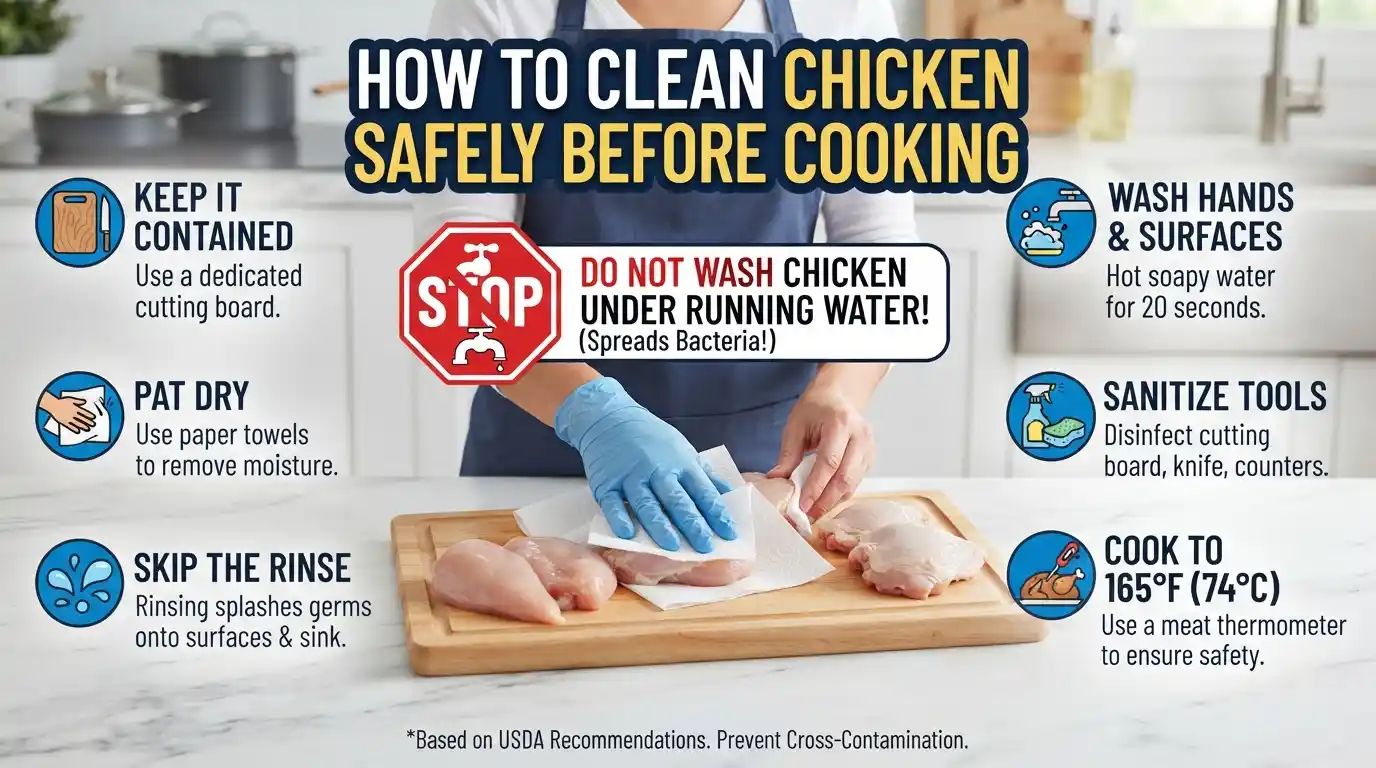
To clean chicken safely, do not rinse or wash raw chicken under running water. Instead, remove the packaging and giblets, trim unwanted fat or skin if needed, and pat the chicken dry with paper towels. Keep raw chicken separate from other foods, clean your hands and surfaces, and cook the chicken to 165°F.
Key Takeaways
- Raw chicken does not need to be washed before cooking.
- Rinsing can spread contaminated chicken juices around your kitchen.
- Remove packaging, giblets, and unwanted pieces before cooking.
- Wash your hands and clean surfaces after handling raw chicken.
- Cook all chicken to a minimum internal temperature of 165°F.
What Does “Clean Chicken” Actually Mean?
When people search for how to clean chicken, they may mean washing the meat, removing unwanted parts, preparing a whole bird, or simply getting chicken ready for a recipe.
In U.S. food-safety guidance, however, cleaning chicken does not mean rinsing it under the faucet. Raw chicken can carry harmful germs, including Salmonella and Campylobacter. Washing it does not make those germs disappear. Instead, water can splash raw chicken juices onto your sink, counters, utensils, and nearby food.
So, think of cleaning chicken as safe preparation rather than washing.
Should You Wash Chicken Before Cooking?
No. You should not wash or rinse raw chicken before cooking it.
The USDA says washing or soaking raw poultry is not recommended because it can spread bacteria through the kitchen. Cooking chicken to the proper internal temperature is what destroys harmful bacteria.
This may feel surprising if you grew up watching someone rinse chicken before cooking. However, current U.S. guidance has a simple goal: keep raw chicken and its juices away from other foods and kitchen surfaces.
You also should never use soap or detergent on chicken. These products are designed for cleaning surfaces, not food, and can contaminate the meat.
How to Clean Chicken Safely Before Cooking
Here is a simple method you can use for chicken breasts, thighs, drumsticks, wings, or a whole chicken.
1. Wash Your Hands
Before touching the chicken, wash your hands with soap and water.
After handling raw chicken, wash them again for at least 20 seconds. Pay attention to your palms, the backs of your hands, between your fingers, and around your fingernails.
2. Prepare a Clean Work Area
Use a clean cutting board or plate specifically for raw meat and poultry when possible.
Keep salads, vegetables, bread, fruit, and cooked foods away from the chicken. Raw chicken juices can transfer germs to foods that will not be cooked.
3. Remove the Chicken From Its Packaging
Open the package carefully and avoid splashing or spreading the juices.
Remove the chicken from the package and place it directly on your clean preparation surface. Throw away the packaging and any absorbent pad that came with it.
You do not need to rinse the chicken afterward.
4. Remove Giblets From a Whole Chicken
If you’re preparing a whole chicken, check the cavity for a packet of giblets.
Remove the packet before cooking. Depending on the product and recipe, giblets may be discarded or saved for another dish.
Do not leave plastic packaging inside the bird while cooking.
5. Trim Unwanted Fat or Skin
Look over the chicken and trim away any excess fat, loose skin, or unwanted pieces according to your recipe.
You don’t have to remove the skin unless you want to. Keeping or removing it is mainly a cooking and preference decision rather than a requirement for making raw chicken safe.
Use a clean knife or kitchen shears and avoid touching other foods while working with the raw chicken.
6. Pat the Chicken Dry
If the chicken is wet from packaging juices, gently pat the surface dry with clean paper towels.
This step can make handling easier and can help you achieve better browning when cooking.
Place the used paper towels directly in the trash. Then wash your hands again.
7. Wash and Sanitize the Work Area
Once you’re finished preparing the chicken, clean the cutting board, utensils, countertop, and other surfaces that contact the raw chicken or its juices.
The CDC recommends cleaning food-preparation surfaces and keeping raw chicken separate from ready-to-eat foods.
How to Clean a Whole Chicken
Cleaning a whole chicken follows the same basic safety rules.
First, keep the chicken in its packaging until you’re ready to prepare it. Then open the package carefully and place the bird on a clean cutting board or other suitable surface.
Next, check inside the cavity and remove the giblet packet. Look over the bird for loose pieces of skin or excess fat that you want to trim.
If the chicken has moisture on the surface, pat it dry with paper towels.
Do not rinse the cavity or outside of the chicken under the faucet. You don’t need water to make the bird safe. Proper cooking provides the important food-safety step.
Finally, clean your hands, cutting board, knife, counter, and any other equipment that touched the raw chicken.
What About Vinegar, Lemon, Salt, or Soap?
You may have heard that vinegar, lemon juice, salt, or other ingredients can “clean” raw chicken.
These methods are common in some kitchens, but they should not replace safe food handling or proper cooking. USDA guidance specifically states that washing or soaking poultry does not destroy bacteria.
Vinegar
Vinegar may be used as a flavoring or marinade ingredient, but it should not be considered a substitute for cooking chicken to a safe temperature.
Lemon
Lemon juice can add flavor to a marinade, but it does not make raw chicken safe in place of proper cooking.
Salt
Salt can be part of a brine or seasoning mixture. However, soaking chicken in salt water is not necessary for food safety. USDA describes soaking as a personal preference rather than a food-safety requirement.
Soap
Never wash chicken with dish soap, hand soap, or detergent. These products should not be applied to food.
How to Handle Chicken Without Cross-Contamination
Cross-contamination happens when germs from raw chicken move to another food, utensil, hand, or surface.
For example, placing raw chicken on a cutting board and then cutting tomatoes on that same unwashed board can transfer germs to the tomatoes.
To reduce this risk:
- Keep raw chicken separate from ready-to-eat food.
- Use a separate cutting board for raw poultry when possible.
- Wash utensils and cutting boards after preparing chicken.
- Clean countertops that contact raw chicken or its juices.
- Wash your hands before and after handling raw chicken.
- Keep raw chicken securely wrapped or in a sealed container in the refrigerator.
These simple habits are more important than rinsing the chicken.
How to Cook Chicken Safely
After preparing your chicken, cook it thoroughly.
The USDA recommends cooking all poultry to a minimum internal temperature of 165°F (73.9°C), measured with a food thermometer. This applies to chicken breasts, thighs, wings, legs, whole birds, ground poultry, giblets, and stuffing.
For a whole chicken, check the temperature in the thickest parts, including the innermost thigh and wing and the thickest part of the breast. Avoid touching bone with the thermometer because it can affect the reading.
Don’t rely only on the chicken’s color or juices to decide if it is safe. A food thermometer provides a much more reliable check.
How to Store and Thaw Raw Chicken
Keep raw chicken refrigerated until you’re ready to prepare it.
The USDA recommends keeping raw poultry in the refrigerator for about 1 to 2 days before cooking. If you need more time, freezing is an option.
For thawing, safe options include:
- Thawing in the refrigerator.
- Thawing in cold water while keeping the chicken in leak-proof packaging.
- Using the microwave, followed by immediate cooking.
Never thaw raw chicken by simply leaving it on the kitchen counter.
Common Questions About Cleaning Chicken
Should you wash chicken before cooking?
No. Raw chicken is ready to cook and does not need to be washed. Rinsing can spread chicken juices and bacteria around your kitchen. Instead, prepare the chicken without washing it and cook it to 165°F.
Can vinegar clean raw chicken?
Vinegar can be used as a marinade ingredient, but it should not be treated as a food-safety replacement for proper cooking. Washing or soaking poultry does not reliably destroy harmful bacteria.
Can you use lemon to clean chicken?
Lemon can add flavor to chicken, but you should not depend on lemon juice to make raw chicken safe. Proper handling and cooking to 165°F are the important food-safety steps.
Should you wash chicken with soap?
No. Never use dish soap, hand soap, or detergent on raw chicken. USDA specifically advises against using soaps or detergents on meat and poultry because they can contaminate the food.
What temperature should chicken reach?
All chicken and other poultry should reach a minimum internal temperature of 165°F (73.9°C) when measured with a food thermometer.
Conclusion
Learning how to clean chicken is really about learning how to prepare raw poultry safely. The most important change for many home cooks is simple: don’t rinse raw chicken under the faucet. Washing can spread chicken juices and germs around the kitchen without making the meat safer.
Instead, remove the packaging and giblets, trim unwanted pieces, pat the chicken dry if needed, and keep it away from ready-to-eat foods. Clean your hands and preparation surfaces after handling it. Finally, use a food thermometer and cook the chicken to at least 165°F.
With these habits, preparing chicken becomes simpler, cleaner, and safer.

Margaret Mitchell is the expert behind coupleanniversary. Transforming ordinary anniversaries into unforgettable memories. With unmatched insight in love, relationships, and celebration ideas, she guides couples to make every milestone special.