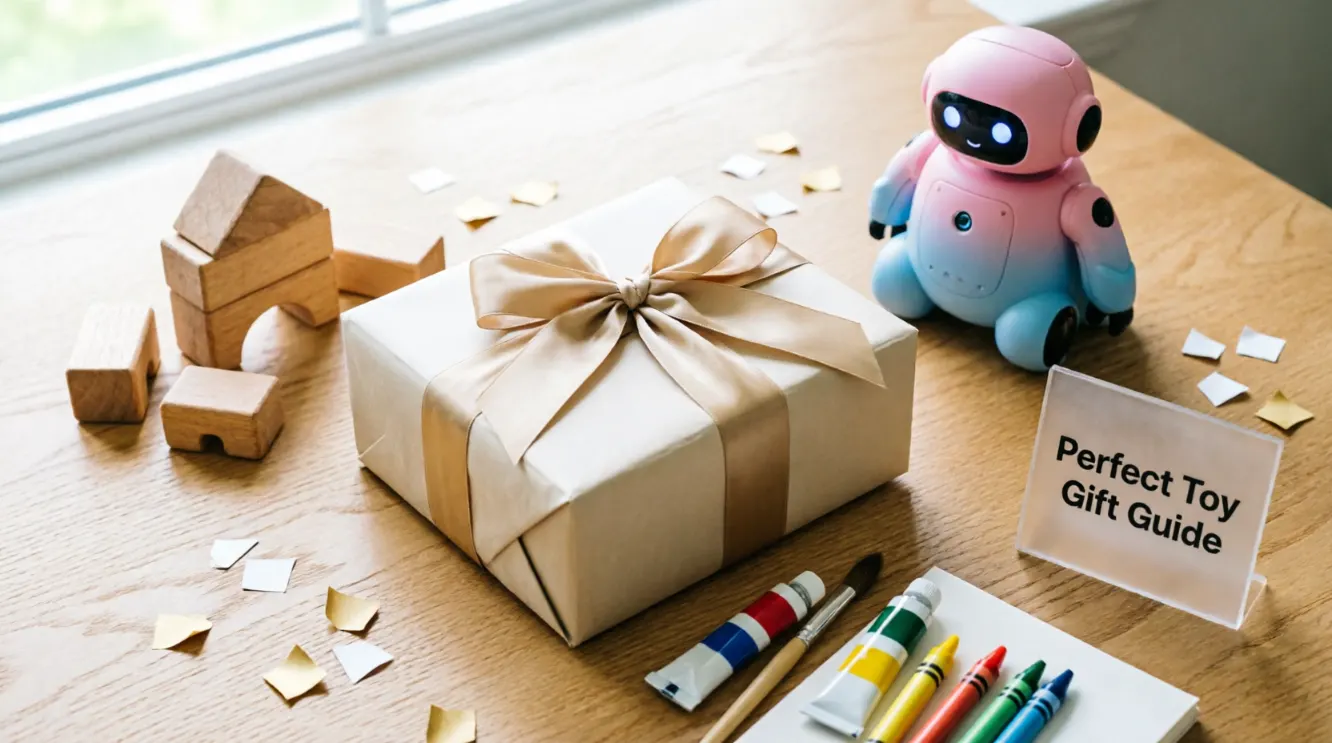
To choose a toy for a gift, start with the child’s age, interests, abilities, and personality. Then check the toy’s safety information, difficulty level, quality, play value, and price. If you are unsure, ask the parents what the child enjoys and what they already have before buying.
Key Takeaways
- Start with the child’s age and abilities, not the toy itself.
- Match the gift to the child’s interests and personality.
- Look for toys that encourage active, creative, or imaginative play.
- Always check age recommendations and safety information.
- Consider budget, storage space, noise, and if the child already owns something similar.
Start With the Child, Not the Toy
Walking into a toy store or browsing an online marketplace can be overwhelming. There are thousands of colorful choices, and many products look exciting at first glance.
The easiest way to narrow them down is to think about the child before you think about the toy.
Ask yourself: How old are they? What do they enjoy? Can they already do? What kind of play keeps them interested?
For example, a child who loves drawing may enjoy an art set more than a popular action figure. A child who spends hours building things may prefer construction toys. Someone who enjoys playing with friends might appreciate a board game.
The goal is not to find the most expensive or impressive toy. It is to find something that fits the child.
7 Things to Consider When Choosing a Toy Gift
1. Age and Developmental Stage
Age should be your first filter, especially when buying for babies and young children.
Toy manufacturers provide age recommendations to help shoppers understand if a product is suitable for a particular age group. The U.S. Consumer Product Safety Commission also advises gift-givers to follow age guidance and choose toys that match a child’s interests and abilities.
For example:
| Age | Gift Direction |
| Babies | Sensory, grasping, and simple activity toys |
| Toddlers | Stacking, sorting, pushing, and simple pretend play |
| Preschoolers | Art, pretend play, puzzles, and construction |
| Elementary-age kids | Games, building sets, science, sports, and creative projects |
| Tweens | Strategy games, hobby kits, collectibles, and activity-based gifts |
These are broad categories, not substitutes for the individual toy’s age label.
A toy that is perfect for a 7-year-old may be too difficult for a 4-year-old. Likewise, some toys intended for older children may contain small parts that create hazards for younger children.
2. Interests and Personality
A child’s interests can turn an ordinary gift into a memorable one.
Think about what they talk about, watch, read, collect, or do in their free time.
They might love:
- Dinosaurs
- Animals
- Space
- Cars
- Art
- Music
- Sports
- Science
- Building
- Cooking
- Reading
- Fantasy
- Puzzles
Also consider personality.
A quiet child may enjoy drawing, puzzles, books, or building. An energetic child may prefer outdoor games or active toys. A social child might enjoy a game designed for family or friends.
When possible, match the way the child likes to play, not just the theme they like.
3. Skill Level and Challenge
A good toy should be interesting without being unnecessarily frustrating.
If it is far too easy, the child may lose interest quickly. If it is far too difficult, they may need constant adult help.
Look for something that offers a manageable challenge.
For example, a beginner builder might enjoy a simple construction set, while an experienced builder may want a more complex project. A child who already loves basic puzzles may be ready for a puzzle with more pieces.
The American Academy of Pediatrics recommends toys that match children’s developmental skills and abilities while also encouraging new skills.
4. Safety
Safety should always come before appearance, popularity, or price.
Read the package carefully. Check the recommended age and any warnings or instructions.
For children under 3, pay particular attention to small parts. CPSC guidance warns against toys with small parts for this age group because of choking risks.
Also pay attention to:
- Small batteries
- Magnets
- Sharp edges
- Loose parts
- Strings or ribbons
- Projectile features
- Battery compartments
- Sturdy construction
The American Academy of Pediatrics also advises consumers to be careful with button or coin batteries, high-powered magnets, loud toys, and poorly made parts.
If the child has younger siblings, consider them too. A toy that is appropriate for an older child may still create a safety concern if a toddler can easily reach its small pieces.
5. Type of Play
Think about what the toy actually lets the child do.
Some toys mainly entertain the child. Others invite the child to build, imagine, solve, create, move, or interact.
Open-ended toys can be especially useful because children can use them in different ways. Blocks, simple construction pieces, art materials, figures, and pretend-play items can support many different play ideas.
Research from Eastern Connecticut State University’s TIMPANI Toy Study found that simple, open-ended toys encouraged creativity, problem-solving, social interaction, and verbalization among preschool children.
That does not mean every electronic or highly specific toy is a poor gift. It simply means you should consider if the child will actively participate in the play.
6. Quality, Size, and Practicality
A beautiful toy is not very useful if it breaks quickly or has nowhere to go.
Before buying, consider the child’s home environment.
Ask:
- Is it sturdy?
- Is it easy to store?
- Does it require a lot of space?
- Is it extremely noisy?
- Does it need frequent battery replacements?
- Will parents need to assemble it?
- Is it easy to clean?
- Does it contain many pieces that can easily get lost?
For a child living in a small apartment, a giant play structure may not be practical. For a family that travels often, a compact game or creative kit might make more sense.
The best gift fits both the child and the household.
7. Budget
You do not need to spend a huge amount to give a thoughtful toy.
Set your budget first. Then compare toys within that range based on quality, usefulness, and how often the child is likely to play with them.
A simple puzzle used dozens of times can provide more value than an expensive toy that loses its appeal after one afternoon.
Price is also not the same as educational value. The AAP notes that traditional items such as blocks, puzzles, crayons, paper, and other simple materials can support creativity, problem-solving, fine-motor skills, and pretend play.
How to Choose a Toy When You Don’t Know the Child Well
This is one of the hardest gift-buying situations.
Maybe you are buying for a classmate, a friend’s child, a niece or nephew, or a child you will meet for the first time.
If possible, ask the parent or caregiver three simple questions:
How old are they?
What are they interested in right now?
Do they already have anything similar?
That last question can prevent duplicate gifts.
If you cannot ask, choose a broad-interest toy that matches the child’s age. Art materials, age-appropriate games, simple building toys, books, pretend-play items, or puzzles can be useful starting points.
Avoid highly specific character or hobby gifts unless you know the child likes them.
Toy Ideas by Child’s Interests
| Child enjoys… | Consider… |
| Drawing | Art supplies, sketchbooks, coloring materials |
| Building | Construction sets, blocks |
| Animals | Animal figures, books, pretend-play sets |
| Puzzles | Jigsaw puzzles, logic games |
| Sports | Age-appropriate sports equipment |
| Science | Science activity kits suitable for the child’s age |
| Pretend play | Dolls, figures, play kitchens, dress-up items |
| Reading | Books, reading-related games |
| Music | Age-appropriate instruments |
| Board games | Family or strategy games suited to their age |
The important point is to match the toy to the child’s actual interest rather than choosing something simply because it is popular.
Common Toy-Gifting Mistakes to Avoid
One common mistake is buying a toy that is too advanced. The child may not know how to use it and could quickly become frustrated.
Another is ignoring the age label because the toy “looks harmless.” Safety guidance exists for a reason, particularly with toys containing small parts.
It is also easy to buy based on what looks impressive to adults. A toy with flashing lights, sounds, and many features may catch your attention, but a simpler toy may give the child more opportunities to create their own play.
Finally, do not forget the parents. A huge, noisy toy may delight a child while creating a daily headache for everyone else.
A Simple 5-Minute Toy Gift Checklist
Before you click Buy, run through this checklist:
1. Age: Is the toy appropriate for the child’s age?
2. Interest: Does it connect with something the child actually enjoys?
3. Ability: Can the child use it without becoming overwhelmed?
4. Safety: Have you checked warnings, small parts, batteries, magnets, and other hazards?
5. Practicality: Will the child and family have enough space and time to use it?
If the answer to all five looks good, you have probably narrowed your options considerably.
Frequently Asked Questions
How do I choose the right toy for a child?
Start with the child’s age, abilities, interests, and personality. Then check safety information, difficulty, quality, and practicality. If you know the parents, asking what the child already owns can also help you avoid duplicates.
Should I choose a toy based on age or interests?
Use age as the safety and suitability filter, then use interests to make the gift personal. A toy should fit the child’s abilities while also connecting with activities they genuinely enjoy.
What makes a good toy gift?
A good toy is safe, age-appropriate, engaging, and suited to the child’s interests. Toys that encourage children to build, imagine, solve problems, create, or interact can offer flexible play rather than one short-lived activity.
Are educational toys better gifts?
Not necessarily. A toy does not need to be labeled “educational” to support learning. Blocks, puzzles, art supplies, pretend-play toys, and simple games can encourage creativity, problem-solving, language, motor skills, and social interaction.
How much should I spend on a toy gift?
Choose an amount that fits your budget rather than assuming a higher price means a better gift. Focus on age fit, safety, durability, the child’s interests, and how likely they are to use the toy repeatedly.
Conclusion
Learning how to choose a toy for a gift becomes much easier when you stop trying to find the single most impressive toy and focus on the child instead.
Start with age and safety. Then think about interests, personality, abilities, play style, quality, household needs, and budget. If you do not know the child well, ask the parents a few simple questions or choose a flexible, age-appropriate option.
Most importantly, remember that a thoughtful toy does not have to be expensive or complicated. The right gift is one that gives the child something enjoyable to explore, create, imagine, solve, or share.

Dan Brown is a passionate relationship writer and anniversary message expert at coupleanniversary. With a deep understanding of love, marriage, and meaningful celebrations, he specializes in creating heartfelt anniversary wishes, romantic messages, and thoughtful words that help couples express their emotions perfectly.