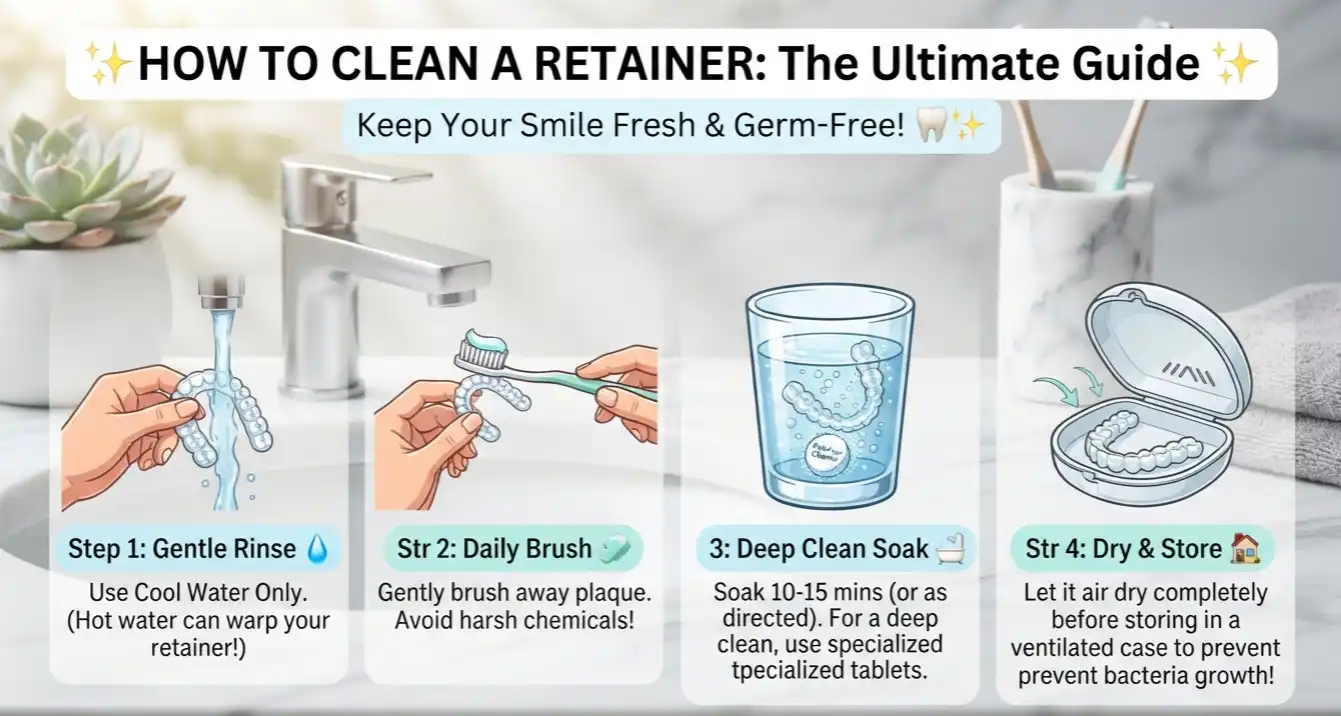
To clean a removable retainer, rinse it with cool or lukewarm water, then gently brush it with a soft toothbrush and mild soap. Rinse it thoroughly and store it in a clean, ventilated case. For deeper cleaning, use a retainer-cleaning solution as directed. Avoid hot water, bleach, and harsh chemicals because they can damage the retainer.
Key Takeaways
- Clean a removable retainer regularly, ideally whenever you take it out.
- Use cool or lukewarm water and gentle cleaning methods.
- Avoid hot water, bleach, and harsh chemicals.
- Use a retainer-cleaning product for periodic deeper cleaning.
- Permanent retainers need careful brushing and flossing around the bonded wire.
- Ask your orthodontist about a retainer that is cracked, warped, painful, or no longer fits correctly.
Why You Should Clean Your Retainer
Your retainer spends a lot of time in your mouth, so it comes into contact with saliva, plaque, bacteria, and food particles. Without regular cleaning, that material can build up and contribute to unpleasant odors and irritation.
The American Association of Orthodontists recommends regular retainer cleaning as part of ongoing orthodontic care. Keeping the appliance clean also helps protect its condition and makes it more pleasant to wear.
Think of your retainer as something that needs care just like your teeth. A quick rinse after removing it can help prevent debris from drying onto its surface.
How to Clean a Removable Retainer
If you have a clear plastic or Hawley retainer, you can remove it before cleaning. Follow these simple steps.
Step 1: Rinse It Right Away
Remove your retainer and rinse it under cool or lukewarm water.
This helps wash away saliva and loose debris before they dry. Avoid hot water. High temperatures can warp some retainer materials and affect the fit.
If you cannot clean it immediately, at least give it a good rinse before putting it into its case.
Step 2: Gently Brush the Retainer
Use a soft-bristled toothbrush that you keep for retainer cleaning. Gently brush all surfaces of the appliance.
For many removable retainers, the AAO recommends using a small amount of mild soap rather than harsh cleaning products.
Pay attention to the areas where plaque or food particles collect. If you have a Hawley retainer, clean around the plastic and wire carefully rather than scrubbing aggressively.
There is some variation in professional guidance about toothpaste. Because many toothpastes can be abrasive, a gentle soap and soft brush are a straightforward option for many removable retainers. Follow your orthodontist’s instructions if they recommend a specific product for your appliance.
Step 3: Rinse Thoroughly
After brushing, rinse the retainer well under cool or lukewarm running water.
Make sure no soap or cleaning solution remains on the appliance before you put it back into your mouth.
If the retainer still looks dirty, do not solve the problem by scrubbing harder. A suitable soaking cleaner may be a better option.
Step 4: Let It Dry and Store It Properly
If you are not putting the retainer back into your mouth immediately, let it air-dry and place it in a clean, ventilated case.
A case protects the appliance from dirt, accidental damage, and loss. The AAO specifically recommends keeping removable retainers in their protective case when they are not being worn.
How to Deep Clean a Retainer
Daily brushing helps with routine care, but you may also want to give a removable retainer a deeper clean.
One option is a retainer-cleaning solution or tablet designed for orthodontic appliances. Follow the product’s instructions carefully because soaking times and directions vary.
The AAO recommends periodic soaking in a retainer-cleaning solution, with its current guidance suggesting about 15–20 minutes for a weekly deeper clean.
Some manufacturer-specific products have their own instructions. For example, Invisalign’s cleaning system directs users to soak compatible retainers for 15 minutes before thoroughly rinsing them.
Do not assume that leaving a retainer in the cleaning solution overnight will make it cleaner. Longer soaking is not automatically better and may not match the product instructions.
How to Clean Different Types of Retainers
Different retainers need slightly different care.
Clear Plastic Retainers
Clear retainers are usually easy to remove and clean. Rinse them after removal and gently brush them with a soft toothbrush and an appropriate mild cleaner.
Because clear plastic can become scratched or warped, avoid aggressive scrubbing and hot water. If you notice persistent cloudiness or buildup, ask your orthodontist about a suitable cleaning product.
Hawley Retainers
Hawley retainers typically combine a plastic or acrylic section with a metal wire.
Clean the plastic and wire gently with a soft toothbrush. Take extra care around the wire and any small spaces where debris can collect.
For deeper cleaning, use a product that is appropriate for your specific retainer. If you are unsure if a particular soaking solution is safe for the metal components, check with your orthodontist first.
Permanent Retainers
Permanent, or fixed, retainers are different because you cannot simply remove them for cleaning.
The bonded wire sits behind your teeth, so your normal oral-hygiene routine becomes especially important. Brush your teeth carefully and floss around the wire. A floss threader, interdental brush, or water flosser may help you reach difficult areas.
Do not try to remove a permanent retainer yourself. If the wire becomes loose or broken, contact your dentist or orthodontist.
What Not to Use on a Retainer
Knowing what not to use is just as important as knowing how to clean a retainer.
Avoid these common mistakes:
- Hot or boiling water: Heat can warp some retainers and change their fit.
- Bleach: Harsh chemicals can damage materials and are not appropriate for routine retainer cleaning.
- Strong chemical cleaners: Unless specifically intended for the appliance, they may damage the retainer.
- Alcohol-based mouthwash for soaking: The AAO advises against soaking retainers in standard mouthwash because some formulas may weaken or discolor the material.
- Dishwasher cleaning: High heat can damage plastic retainers.
- Hard scrubbing: Aggressive brushing can scratch some surfaces.
When in doubt, use the cleaning method recommended by your orthodontist for your particular retainer.
How Often Should You Clean Your Retainer?
A removable retainer should receive regular cleaning rather than an occasional deep clean.
The AAO recommends cleaning removable retainers whenever they come out of your mouth, while its care guidance also recommends periodic deeper cleaning with an appropriate solution.
A simple routine looks like this:
Every time you remove it: Rinse it with cool or lukewarm water.
Daily: Gently clean it with a soft toothbrush and suitable mild cleaner.
Periodically: Use a retainer-cleaning solution according to its instructions.
Whenever you notice a problem: Contact your orthodontist if you see damage, major buildup, or a change in fit.
Consistency matters more than an occasional aggressive cleaning session.
How to Remove Retainer Odor and Buildup
A bad smell often means the retainer needs better cleaning. Start with a thorough rinse and gentle brushing.
If odor remains, a cleaning solution made for retainers may help. Follow the manufacturer’s soaking instructions rather than using random household chemicals.
Visible hard buildup can be more difficult to remove at home. If you see stubborn deposits that do not come away with appropriate cleaning, ask your dentist or orthodontist to examine the appliance.
Also remember to clean your retainer case. A dirty case can transfer debris back onto an otherwise clean retainer.
When Should You Replace or Professionally Clean a Retainer?
Cleaning cannot repair every retainer problem.
Contact your orthodontist if the retainer:
- Cracks or breaks
- Becomes warped
- Suddenly feels too tight
- Becomes unusually loose
- No longer fits correctly
- Causes persistent pain or irritation
- Has buildup that you cannot safely remove
The AAO advises patients not to force a retainer that does not fit or causes pain. Your orthodontist can determine if the appliance needs adjustment or replacement.
If you have a permanent retainer and the wire becomes loose or damaged, contact your dental professional rather than trying to fix it yourself.
Frequently Asked Questions
Can I clean my retainer with toothpaste?
It depends on the retainer and your orthodontist’s instructions. Some professional guidance has recommended toothpaste for certain retainers, while current AAO guidance commonly recommends gentle brushing with water and mild soap. Because some toothpastes can be abrasive, ask your orthodontist which method is appropriate for your appliance.
Can I use mouthwash to clean my retainer?
Avoid soaking your retainer in standard mouthwash unless your orthodontist specifically recommends it. Some mouthwashes contain alcohol or other ingredients that may weaken or discolor retainer materials.
Can I use hot water to clean my retainer?
No. Use cool or lukewarm water instead. Hot water can warp some retainer materials and may change the appliance’s fit.
How do I clean a permanent retainer?
You cannot remove a permanent retainer yourself. Brush your teeth carefully and floss around the bonded wire. A floss threader, interdental brush, or water flosser can help clean difficult areas.
How often should I deep clean my retainer?
A periodic deeper clean can complement your daily routine. The AAO currently suggests soaking removable retainers in a retainer-cleaning solution for about 15–20 minutes once a week. Always follow the directions for the specific cleaning product you use.
What should I do if my retainer smells bad?
Clean it thoroughly with a gentle method and consider a suitable retainer-cleaning solution. Also clean the storage case. If the odor continues despite proper cleaning, ask your dentist or orthodontist to check the appliance.
Final Thoughts
Learning how to clean a retainer does not have to be complicated. For a removable retainer, rinse it regularly, gently brush it with an appropriate cleaner, rinse it thoroughly, and store it safely. Periodic deep cleaning can help control buildup and odor.
Most importantly, avoid hot water and harsh chemicals, and follow the care instructions provided for your specific appliance. If your retainer becomes damaged, painful, or stops fitting correctly, let your orthodontist check it rather than trying to reshape or repair it yourself.

Margaret Mitchell is the expert behind coupleanniversary. Transforming ordinary anniversaries into unforgettable memories. With unmatched insight in love, relationships, and celebration ideas, she guides couples to make every milestone special.