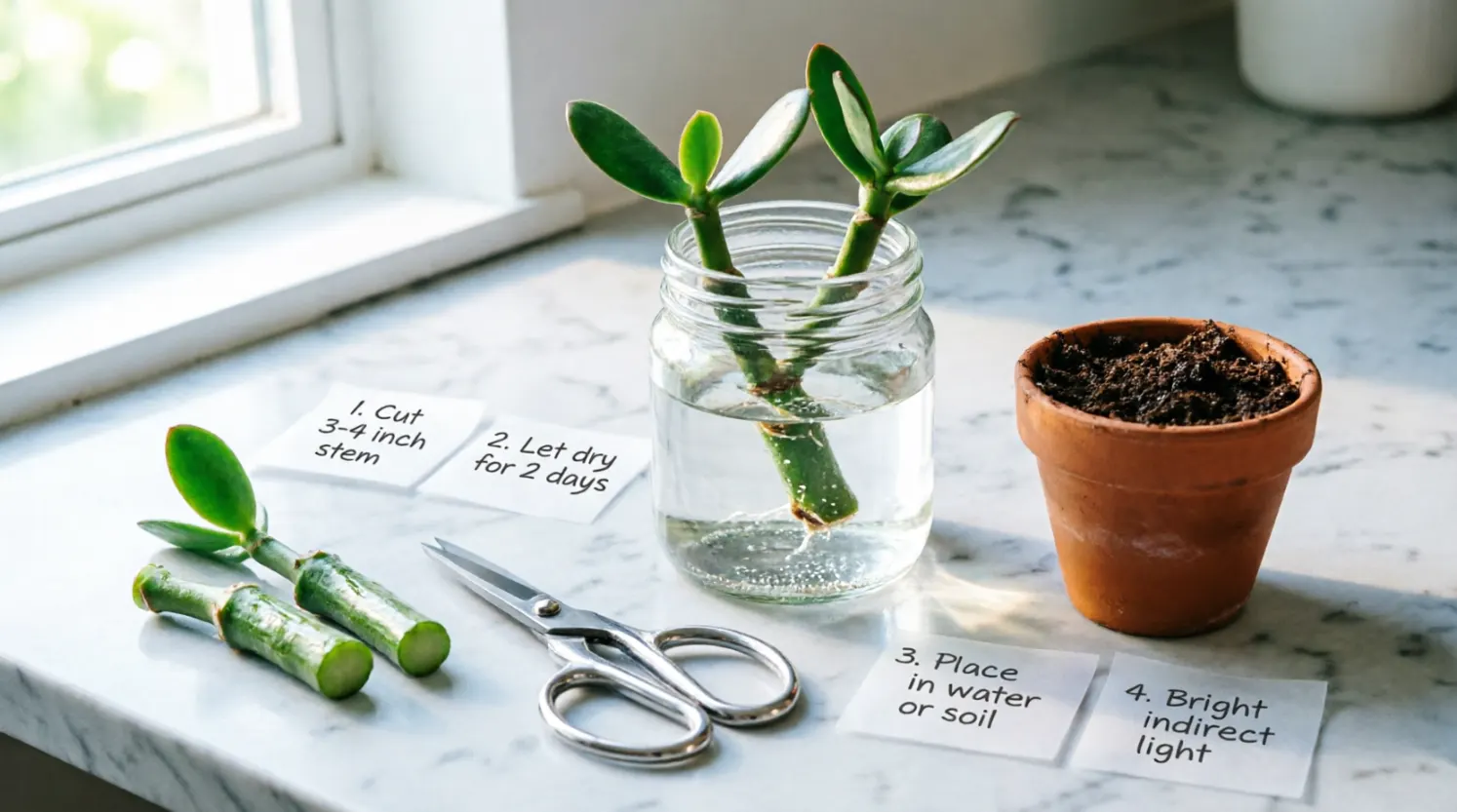
To propagate a jade plant, take a healthy stem or leaf cutting, let the cut end dry and form a callus for a few days, then place it in well-draining succulent soil. Give it bright light and water sparingly. Jade plants can also be propagated in water, but soil propagation is a straightforward option for beginners.
Key Takeaways
- Jade plants can grow from both stem and leaf cuttings.
- Let fresh cuttings dry before planting to reduce the risk of rot.
- Well-draining succulent or cactus soil works well.
- Spring and summer generally provide faster rooting because the plant is actively growing.
- Too much water is one of the biggest problems when propagating jade plants.
What You Need to Propagate a Jade Plant
You do not need a greenhouse or complicated equipment to start jade plant propagation. A healthy parent plant, clean scissors or a sharp knife, a small container with drainage, and well-draining succulent soil are usually enough.
Choose a healthy part of the plant. Avoid leaves or stems that look damaged, diseased, mushy, or heavily infested. Starting with healthy plant material gives your cutting a better chance to develop roots. Penn State Extension also recommends beginning propagation with healthy, unstressed plant material and using clean tools.
For the growing medium, use a cactus or succulent potting mix that drains quickly. Jade plants store water in their fleshy leaves and stems, so constantly wet soil can create problems.
How to Propagate a Jade Plant From a Stem Cutting
Stem propagation is a practical choice when you want a new plant that starts with a visible stem. It also works well when you are pruning an overgrown jade plant.
Step 1: Choose a Healthy Stem
Look for a firm, healthy branch with several leaves. A cutting a few inches long is a convenient size for starting a new plant.
If your jade plant has become tall or uneven, propagation can also work alongside pruning. You can use suitable healthy pieces instead of throwing them away.
Step 2: Make the Cutting
Use a clean, sharp pair of scissors or pruning shears. Cut the stem cleanly rather than crushing it.
Remove a few leaves from the lower portion of the cutting. Leave some healthy leaves near the top. The bare portion will eventually sit in the growing medium.
Step 3: Let the Cutting Callus
This step is easy to skip, but it matters.
Place the cutting in a dry location away from harsh direct sunlight. Allow the cut surface to dry for several days and develop a callus before planting.
Why? The dried surface is less vulnerable to staying wet immediately after cutting. The University of Wisconsin–Madison recommends allowing jade cuttings to dry for a few days because the healed surface is less likely to rot.
Step 4: Plant the Cutting
Fill a small pot with well-draining succulent or cactus mix. Make a small hole and place the callused end of the stem into the soil.
Firm the mix gently around the stem so the cutting stands upright. Do not pack the soil tightly.
Step 5: Encourage Root Growth
Place the pot somewhere bright and warm with good light. Jade plants prefer plenty of light, although a fresh cutting should not be exposed to harsh conditions that could stress it.
Avoid constantly watering the pot. Jade plants are succulents, and their soil should be allowed to dry between watering’s.
After some time, the cutting should begin developing roots. A gentle tug that meets resistance can indicate that roots have formed, although you should avoid repeatedly pulling the cutting out to check.
How to Propagate a Jade Plant From a Leaf
Leaf propagation is another simple way to create a new jade plant. It takes patience, but one healthy leaf can eventually produce new growth.
Step 1: Choose a Healthy Leaf
Select a firm, healthy leaf. Gently twist it away from the stem so that the entire leaf comes off.
The base of the leaf is important. If part of the base remains attached to the mother plant, the leaf may not propagate successfully.
Step 2: Let It Dry
Place the leaf somewhere dry and allow the damaged end to callus for a few days.
Do not immediately bury a freshly removed leaf in wet soil. The goal is to give the wound time to dry.
Step 3: Place It on Soil
Put the callused leaf on top of a well-draining succulent mix. You generally do not need to bury the entire leaf.
The RHS notes that jade and other succulent leaves can develop roots when placed on suitable compost, and recommends moving rooted material into gritty, well-drained houseplant compost.
Step 4: Wait for New Growth
Keep the leaf in a bright location and be patient. Roots and new plant growth do not always appear immediately.
Leaf propagation can take longer than stem propagation, so avoid disturbing the leaf every few days. Give it time to establish.
Can You Propagate a Jade Plant in Water?
Yes, jade plants can be propagated in water, although soil propagation is a simple choice for succulent cuttings.
To try water propagation, start with a healthy stem cutting and let the cut end callus first. Then place the lower portion in water while keeping the leaves above the waterline.
Change the water regularly and watch for roots. Once the roots have developed sufficiently, transfer the cutting to a well-draining potting mix.
Water propagation is attractive because you can watch the roots develop. However, Martha Stewart’s plant experts note that water propagation can increase the risk of rot and can make the transition from water-grown roots to soil more difficult.
What Is the Best Method for Jade Plant Propagation?
For most beginners, a stem cutting planted in well-draining soil is a practical starting point. Leaf propagation is useful when you want to create several new plants from individual leaves.
| Method | Best for | Main advantage | Main challenge |
| Stem cutting | A larger new plant | Starts with a stem | Requires a healthy branch |
| Leaf cutting | Making multiple starts | Uses individual leaves | Usually requires more patience |
| Water propagation | Watching roots develop | Easy to monitor roots | Greater concern about rot and transplanting |
The best choice also depends on what material you have available. If a healthy leaf has naturally fallen from your plant, leaf propagation makes sense. If you are pruning a healthy branch, a stem cutting is convenient.
When Is the Best Time to Propagate a Jade Plant?
Jade plants can be propagated throughout the year, but rooting tends to be easier during active growth.
The University of Wisconsin–Madison says jade cuttings root most easily in summer, although propagation can be done at other times of year. Martha Stewart’s horticultural sources similarly note that spring and summer generally provide faster rooting because the plant is actively growing and conditions are warmer and brighter.
If you propagate indoors during fall or winter, do not assume failure just because roots take longer. Lower light and slower growth can affect the process.
How to Care for Jade Cuttings After Planting
Once your cutting is planted, resist the urge to give it constant attention.
Give it a good light. Jade plants need abundant light. Established plants can handle direct sun, while bright indirect light is also suitable in many indoor situations.
Use fast-draining soil. Succulent or cactus mixes are designed to drain more readily than heavy garden soil.
Avoid overwatering. Jade plants store water in their leaves and stems. Wet soil that stays saturated can encourage rot.
Use a container with drainage. Excess water needs somewhere to escape.
Be patient. A cutting may look unchanged for a while as it concentrates on developing roots.
Common Jade Plant Propagation Problems
Cutting Turns Mushy or Black
This often points to excess moisture or rot. Check if the growing medium stays wet for long periods. If the cutting has a healthy section above the damaged area, you may be able to remove the affected portion and restart with a fresh, dry cutting.
Cutting Does Not Root
First, check the basics: Is the cutting healthy? Does the container drain well? Is the plant receiving enough light? Are you watering too frequently?
Low light and excess moisture can both interfere with successful propagation.
Leaf Shrivels
Some loss of firmness can happen as a leaf uses its stored moisture. However, a leaf that becomes completely dry and shows no signs of development may not have propagated successfully.
Try several healthy leaves rather than relying on just one.
Cutting Falls Over
A fresh stem cutting may not have enough roots to anchor itself. Make sure the lower stem is positioned securely in the soil. Avoid making the pot excessively large, since a small cutting in a huge container can leave a lot of unused soil holding moisture.
How Long Does Jade Plant Propagation Take?
The exact timing varies with the cutting, light, temperature, moisture, and growing conditions.
Jade cuttings generally root over a period of weeks rather than overnight. University of Wisconsin–Madison notes that jade pieces can root in a few weeks under suitable conditions.
Instead of focusing on an exact number of days, watch for signs of progress. A stem that stays firm and healthy and eventually resists a very gentle tug is more encouraging than one that becomes soft or discolored.
Frequently Asked Questions
Can you grow a jade plant from a single leaf?
Yes. Jade plants can be propagated from individual leaves. Choose a healthy, intact leaf, let the base dry and callus, then place it on a well-draining growing medium. New roots and growth can develop from the leaf over time.
Is it better to propagate jade plants in water or soil?
Both methods can work. Soil propagation is a straightforward option for jade because the plant prefers well-draining conditions. Water propagation lets you watch roots develop, but excess moisture can increase the risk of rot and the rooted cutting must eventually transition to soil.
Can I put a jade cutting directly into soil?
Yes, but allow the fresh cut to dry and callus first. Then place it in well-draining soil. Starting with a dry, healed cutting helps reduce the chance of rot.
How often should I water a jade cutting?
Avoid keeping the soil constantly wet. Jade plants are succulents and generally prefer the growing medium to dry between watering. The exact schedule depends on light, temperature, pot size, and soil drainage.
Why is my jade cutting not rooting?
Check if it has enough light, if the soil drains well, and if you are watering too much. Also make sure the original cutting was healthy and that its cut surface had time to dry before planting.
Conclusion
Learning how to propagate jade plants is easier than it may seem. You can start with a healthy stem or even a single leaf, allow the fresh cut to callus, and then use a well-draining growing medium.
For beginners, stem propagation in succulent soil offers a simple place to start. Leaf propagation is another useful option when you want to turn individual leaves into new plants. Water propagation is possible too, but it requires more attention to moisture and the eventual transition to soil.
The biggest lesson is simple: give jade cuttings plenty of light, good drainage, and patience not constant water. With the right conditions, a small piece of an established jade can eventually become a new plant.