Introduction
Rinsing raw chicken under the tap feels like second nature to a lot of home cooks, often passed down as a habit from parents or grandparents. It seems logical: water should rinse away anything unwanted, right? But food safety experts, including the USDA and CDC, have spent years explaining why this common habit can actually make your kitchen less safe, not more.
The short answer is that washing raw chicken doesn’t remove harmful bacteria, and it can spread them around your sink, counters, and utensils through tiny water droplets. Cooking, not rinsing, is what actually makes chicken safe to eat.
In this guide, you’ll learn why washing chicken is discouraged, what actually happens when you rinse it, and the steps that do keep your kitchen safe. We’ll also cover proper handling, cooking temperatures, and answers to common questions. Let’s get into it.
Understanding Raw Chicken and Bacteria
Before deciding if to rinse your chicken, it helps to understand what you’re actually dealing with. Raw poultry commonly carries bacteria such as Salmonella and Campylobacter, which are two of the leading causes of foodborne illness. These bacteria live on the surface of the meat and sometimes in the juices as well.
Here’s the key issue: these bacteria aren’t sitting loosely on the surface waiting to be rinsed away. They can be more firmly attached, and washing under running water doesn’t reliably remove them. Instead, the force of the water can cause tiny droplets to splash outward, landing on your sink basin, countertops, faucet handles, sponges, and any nearby dishes or produce.
This splashing effect is called cross-contamination, and it’s the main reason food safety agencies recommend skipping the rinse entirely. Once bacteria land on a surface, they can survive there and transfer to other foods, especially anything eaten raw, like salad greens or fruit.
The good news is that cooking chicken to a safe internal temperature reliably kills these bacteria, which is why cooking, not washing, is the step that actually matters for safety.
The Science of Cross-Contamination
Understanding why rinsing spreads bacteria rather than removing it comes down to basic physics and microbiology.
Water pressure creates aerosols. Even a gentle stream of tap water breaks into tiny droplets when it hits the surface of the chicken. Research from food safety agencies has shown these droplets can travel several feet in every direction.
Bacteria don’t rinse off easily. Salmonella and Campylobacter can adhere to the surface texture of poultry skin and flesh, meaning a quick rinse does little to dislodge them.
Surfaces stay contaminated. Once droplets land on your sink, counters, or nearby items, the bacteria can survive there for hours, especially if the area isn’t cleaned and disinfected afterward.
Only heat reliably kills these bacteria. Cooking chicken to the correct internal temperature denatures the proteins in harmful bacteria, effectively neutralizing them. No amount of rinsing achieves this same result.
This is why food safety organizations across many countries, including the USDA, the UK’s Food Standards Agency, and Australia’s food safety authorities, all advise against washing raw poultry. The science consistently points to cooking as the safeguard, not rinsing.
Before You Start: Rethinking the Habit
If you’ve always rinsed your chicken, it can feel strange to skip that step. Here’s how to reframe it before you get started.
It’s not about being unclean. Skipping the rinse isn’t about cutting corners. It’s specifically because rinsing spreads bacteria rather than removing it.
Trust the cooking process. Proper cooking temperatures are far more effective at eliminating bacteria than any amount of washing.
Focus your effort elsewhere. Instead of spending time rinsing, that same time is better spent on safe handling, using a meat thermometer, and cleaning surfaces thoroughly afterward.
Expect some initial hesitation. Old habits are hard to break, and it’s normal to feel unsure the first few times you skip the rinse. Trust the process and the temperature guidelines below.
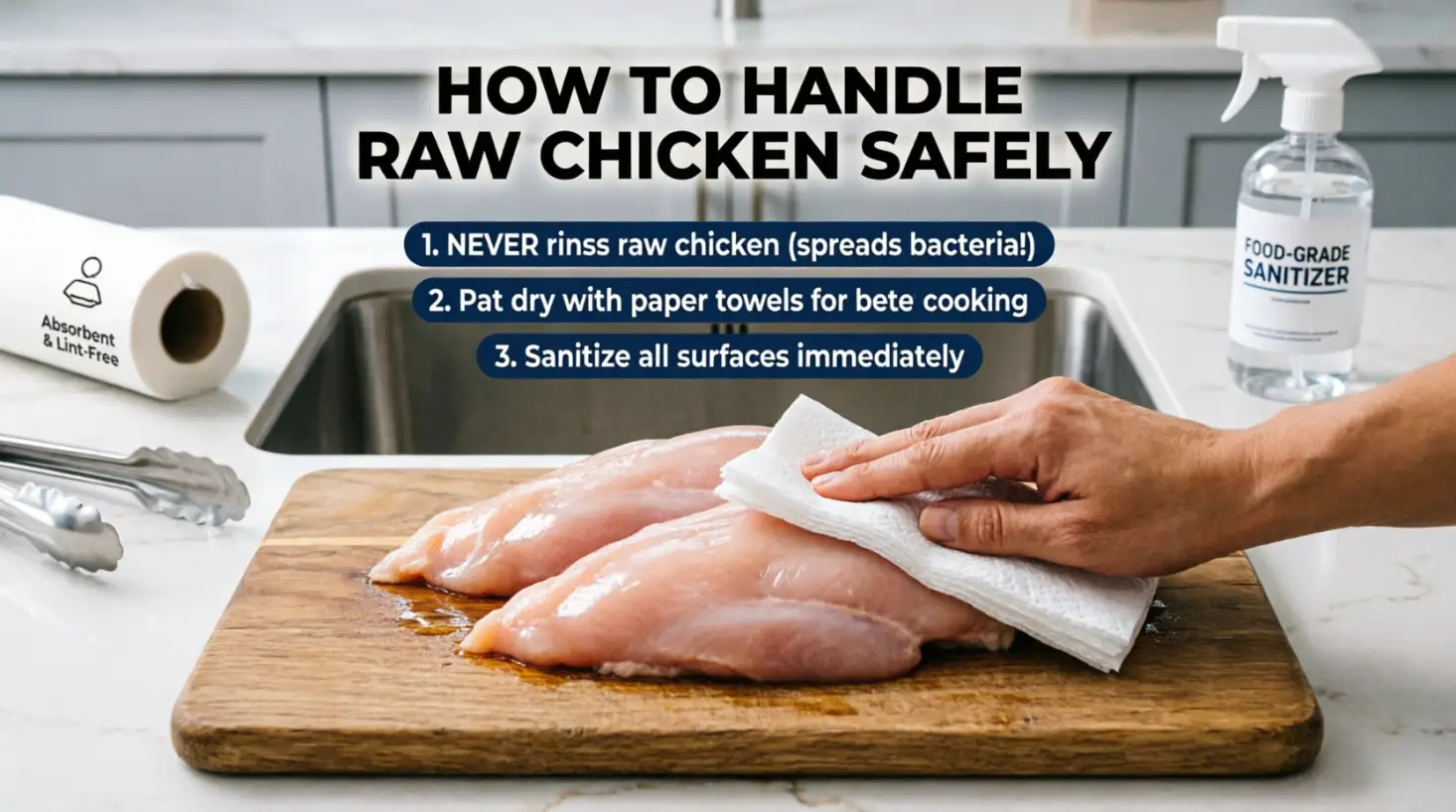
Know when moisture removal is useful. If a recipe calls for a very dry surface, such as for crispy roasted skin, patting chicken dry with a paper towel is a safe and effective alternative to rinsing.
What to Do Instead of Washing
Rather than rinsing, food safety experts recommend focusing on handling, temperature, and cleanup. Here’s what actually keeps your kitchen safe.
Pat it dry if needed. If a recipe benefits from drier skin, use a paper towel to blot the surface instead of running water over it.
Use separate cutting boards. Keep one cutting board for raw meat and a separate one for produce and ready-to-eat foods.
Wash your hands thoroughly. Scrub your hands with soap and warm water for at least 20 seconds after handling raw chicken.
Clean utensils and surfaces immediately. Wash any tools, plates, or surfaces that touch raw chicken with hot, soapy water right after use.
Avoid cross-contact. Never place cooked food back on a plate or cutting board that holds raw chicken without washing it first.
Sanitize your sink. Since raw chicken often sits in or near the sink during prep, clean the basin and faucet handles afterward, even if you skipped rinsing the chicken itself.
Step-by-Step: Safely Preparing Raw Chicken
This method replaces washing with the handling steps that food safety experts actually recommend. Set aside about 10 minutes for preparation and cleanup.
Step 1: Wash your hands. Before touching raw chicken, wash your hands with soap and water.
Step 2: Set up a dedicated space. Use a cutting board reserved for raw meat, placed away from any produce or ready-to-eat food.
Step 3: Remove packaging carefully. Open the packaging over the sink or trash to avoid dripping juices onto counters.
Step 4: Pat dry if needed. If your recipe calls for it, blot the surface with a paper towel instead of rinsing.
Step 5: Trim and prepare. Cut, season, or portion the chicken directly on your dedicated cutting board.
Step 6: Discard packaging and paper towels immediately. Throw them away right after use to avoid leaving contaminated materials on the counter.
Step 7: Wash your hands again. Clean your hands thoroughly before touching anything else, including doorknobs, phones, or other ingredients.
Step 8: Clean all surfaces and tools. Wash the cutting board, knife, and any surfaces the chicken touched with hot, soapy water.
Step 9: Cook to a safe temperature. Use a meat thermometer to confirm the chicken has reached a safe internal temperature before serving.
Cooking Temperatures That Keep You Safe
Since cooking is what actually eliminates harmful bacteria, hitting the right temperature matters far more than any rinsing step.
Whole chicken and chicken pieces. Cook to an internal temperature of 165°F (74°C), measured at the thickest part of the meat.
Ground chicken. Because grinding mixes surface bacteria throughout the meat, ground chicken should also reach 165°F (74°C) throughout.
Using a meat thermometer. Insert the thermometer into the thickest part of the meat, avoiding bone, for the most accurate reading.
Resting time. Some recipes recommend a short rest after cooking, which allows the temperature to remain stable and juices to redistribute.
Visual cues aren’t reliable. Color alone isn’t a dependable way to judge doneness, since chicken can look done before it reaches a safe temperature, or appear slightly pink even when fully cooked. A thermometer is the only reliable check.
Common Myths and Misconceptions
Because washing chicken is such a long-standing habit, several myths persist around it.
Myth: Washing removes bacteria. In reality, most bacteria remain on the surface even after rinsing, while the process spreads droplets around your kitchen.
Myth: Vinegar or lemon juice sanitizes chicken. Acidic rinses may slightly reduce surface bacteria in some studies, but they don’t reliably eliminate the risk, and they still create the same splashing problem as water.
Myth: If it smells off, washing will fix it. An unusual smell suggests the chicken may be spoiled, and washing won’t reverse that. When in doubt, it’s safer to discard it.
Myth: Cooking will kill bacteria on your counters too. Cooking only affects the food itself. Any bacteria that splashes onto nearby surfaces during rinsing needs to be cleaned separately.
What to avoid. Skip rinsing, acidic washes, or any method that involves running water over raw poultry, since none of these approaches reliably improve safety.
FAQs
Is it ever necessary to rinse chicken?
Major food safety agencies advise against it in virtually all cases, since cooking is what makes the chicken safe.
What if my recipe specifically says to wash the chicken?
Many older recipes include this step out of habit. You can safely skip it and proceed with cooking instead.
Does brining count as washing?
Brining involves soaking chicken in a seasoned liquid, which is different from rinsing under running water, though the same careful handling and surface cleaning still apply afterward.
How do I get crispy skin without rinsing?
Pat the chicken dry with paper towels, which removes surface moisture without the risks of running water.
What should I do if chicken juice splashes on my counter?
Clean the area immediately with hot, soapy water, and sanitize if possible.
Can washing ever make chicken more dangerous?
Yes, in a sense. Even if it doesn’t affect the chicken itself, it increases the risk of contaminating your sink, counters, and other foods nearby.
Conclusion
The idea of washing chicken feels intuitive, but food safety research consistently shows it does more harm than good. Rinsing spreads bacteria through your kitchen rather than removing it, while proper cooking temperatures are what actually make chicken safe to eat.
Remember the key points: skip the rinse, pat dry if your recipe calls for it, keep raw chicken away from other foods, and always cook to 165°F (74°C). Careful handling and thorough cleanup matter far more than running water ever could.
Breaking a long-held habit can feel unfamiliar at first, but it’s a simple change that makes your kitchen genuinely safer.
If you found this guide helpful, share it with someone who still rinses their chicken, and subscribe for more practical food safety guides.

Margaret Mitchell is the expert behind coupleanniversary. Transforming ordinary anniversaries into unforgettable memories. With unmatched insight in love, relationships, and celebration ideas, she guides couples to make every milestone special.